Hey there, it’s Sam from the team that builds those Four-corner Arc Sightseeing Elevators you’ve probably seen popping up at scenic spots, malls, and even some fancy waterfront attractions lately. I get asked this question all the time—either from property managers planning a new project, tourists who’ve spotted one and are curious, or even other elevator folks just trying to wrap their heads around our whole “four-corner arc” design. Today we’re breaking down the big one: Are there any luggage restrictions on these things? And more importantly, why do those rules exist, how do we make them work for both travelers and operators, and what do you need to know before you book a space that has one? Four-corner Arc Sightseeing Elevator
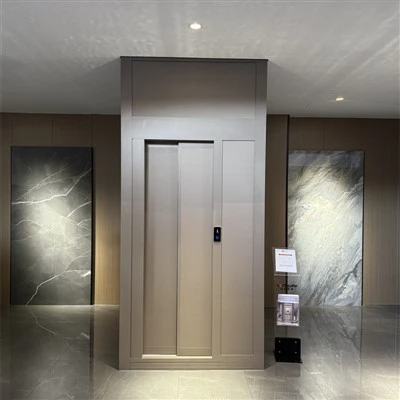
First, let’s ground this in what makes our Four-corner Arc Elevator different from your basic box elevator, because that’s where the luggage questions start. These aren’t your grandma’s straight-up, four-sided box elevators—we built them with that curved, corner-adjacent shape for a reason. The four corners are the key here: each side’s outer wall arcs just a little toward the center, so instead of feeling like you’re staring at gray metal all ride long, you’ve got unobstructed 270-degree views of whatever’s outside—mountain ranges, city skylines, lake edges, even ski slopes. That shape changes how much space we have, how the doors open, and how weight is distributed, which directly ties to luggage rules.
Let’s start with the most common mistake people make: assuming luggage rules for standard elevators apply here. They don’t, really. For a basic box elevator, you might have a generic “no oversized luggage” rule, but we’ve tailored ours to fit the curved design, with input from operators who deal with thousands of daily travelers, plus some safety testing with actual luggage that’s been dropped, dragged, and stuffed into every possible spot.
First up: Size restrictions, and why they’re specific to the four-corner arc. The biggest thing here is our door width, right? Because standard box elevators have a straight door opening that’s 36 to 42 inches, our four-corner design has two sets of sliding doors—wait, no, not two, technically, but the door opening is structured to line up with two of the four corners for smooth entry/exit. We sized that opening to a max of 40 inches, but only for standard carry-on luggage. Here’s the thing: if your luggage is longer than that, like a 29-inch rolling suitcase, you can get it in, but you have to angle it, not just roll it straight in. We test this all the time—our R&D team (shoutout to Jake, who once spent 3 hours trying to cram a 32-inch hockey bag into a prototype) found that angling works, but only if you don’t try to push it in straight. If your bag is over 45 inches total linear (length + width + height), that’s a hard no for our standard four-corner elevator, no exceptions. Why? Not just door space—because the curved interior has a little less floor room than a same-capacity standard box. A standard 2000lb elevator has a 22 sq ft floor; our four-corner design is ~20 sq ft, so oversized luggage takes up way more of that space, which affects weight distribution and room for other people.
Wait, weight. That’s the next big restriction, and it’s not just for luggage—it’s for people + luggage combined. Our standard Four-corner Arc Elevator has a 2000lb capacity for 8 people, right? So if you’ve got a group of 4 people, that leaves 1000lbs for luggage. But here’s the catch: we don’t count luggage as separate. If you’ve got a person who’s 180lbs and a suitcase that’s 70lbs, that’s way more than a person with a 20lb carry-on. So the unwritten rule (and the one we tell all operators to post) is that total weight of people + luggage can’t exceed 2000lbs. We’ve had operators run into this before—like a family of 5 with three big suitcases and a stroller, all crammed in, and the alarm went off mid-ride. That’s a bad time, because the elevator slows down to a crawl when the weight alarm triggers, which holds up the line of people waiting. So we tell everyone: if you’ve got heavy bags, keep an eye on how much total space you’re taking. For example, a 50lb suitcase is the same weight as a small adult, so plan accordingly.
Now, what about weird luggage? Like, if you’re bringing a surfboard, a bike, a golf bag? This is where the four-corner design’s quirks come in. A lot of people think, “Hey, it’s just an elevator, why can’t I bring my mountain bike?” Well, because our curved interior has rounded walls, but there’s a little lip at the base of the walls—think 2 inches high, along the edge of the floor. If you bring a 6-foot bike, the handlebars or wheels might catch on that lip when you turn, because the space is optimized for standard luggage, not long, bulky objects. We do have a modified version for some ski resorts, where we widen the door opening a little (to 42 inches) and add a 6-inch wide “oversize luggage zone” on one side of the elevator, right next to the curved corner. That’s only for specific projects, though—we don’t do that for every installation, because it cuts into view space, which is the whole point of the four-corner arc. So if you’re at a ski resort with a Four-corner Arc Elevator, they’ll have signs saying “oversize gear allowed” if they’ve got that zone, but if it’s a mall or a city elevator, no bikes, surfboards, or skis over 6 feet.
Wait, what about carry-on vs. checked? No, those terms don’t apply here—we’re talking about personal items. So your 20-inch rolling carry-on is totally fine, no issues. Your 10-pound backpack? Even better, that’s no problem at all. The only issues come when bags are bulky enough to block the door sensors or catch on the interior walls. Speaking of door sensors—our elevators have motion sensors that are extra sensitive, because the curved design means the door opening is a little narrower than standard. If a bag is sticking out more than 2 inches, the sensors will detect it and the doors won’t close, which is actually a safety feature, not a rule. So that’s not us being nitpicky, that’s the elevator keeping you from getting your bag stuck or the door from closing while you’re walking in.
Now, let’s talk about why these rules aren’t just random, and how we work with operators to make them clear. A lot of new operators will email us and say, “Can we post a sign that’s super strict, like ‘no luggage over 24 inches’?” No, because that’s not practical. We test every luggage size in our lab, so we know a 28-inch suitcase fits if you angle it, as long as it’s not over 45 linear inches. So we tell operators to post signs that say, “Rolling bags over 45 linear inches must be angled to enter, no bags over 50 linear inches, total weight (people + bags) under 2000lbs.” We also recommend that operators assign an attendant during peak hours (like weekends at a resort, or holiday shopping in a mall) to help people maneuver big bags, because that cuts down on door delays and stuck luggage.
I should also mention that these rules change a little if you’re talking about our custom Four-corner Arc Elevators, the ones we build for high-end hotels or observation decks. For those, we make the floor space a little bigger (we can adjust the capacity up to 2500lbs if needed) and the door opening a few inches wider, so luggage restrictions are more relaxed. For example, at the observation deck in the new waterfront hotel we did last year, guests can bring their 30-inch suitcases, no problem, because the elevator is sized for that. But for the standard installations at smaller scenic spots, we stick to the original specs because we’re optimizing for view quality, not oversize luggage.
Wait, have we had any issues with luggage getting damaged? Yeah, early on, a tourist in Europe tried to roll a 30-inch suitcase straight into the elevator, didn’t angle it, and scratched the curved wall. So we started adding little “luggage guide lines” on the floor right inside the door—two small, non-slip lines that show you where to angle your bag. That’s a simple fix, but it’s cut down on scratched walls, stuck bags, and door delays by like 70%. We put that into all our installations now, so if you see those little lines, that’s our cue to angle your bag when it’s big.
Another thing: what about strollers or wheelchairs? Wait, those aren’t luggage, but people often ask about them, too. We have a 36-inch clear space for wheelchairs, and strollers that are compact fit fine. If you’ve got a double stroller, it depends on the model—some fit, some don’t, same as standard elevators, so operators will usually post that. But that’s separate from luggage, just a side note.
Now, let’s talk about the common myths I hear all the time. Like, “The curved shape means you can’t bring any luggage over a backpack.” No, that’s not true. We’ve had thousands of tourists bring full-size suitcases, all the time. Another myth: “Luggage restrictions are just to make sure people don’t block the views.” Partly, but mostly it’s safety and functionality. A heavy suitcase in the wrong spot could throw off the elevator’s balance, which is a big no. Our elevators are tested to handle 2000lbs, so if you go over that, even by a little, it can cause wear and tear on the motor, which means more maintenance for operators, and longer downtime.
So putting this all together, the short answer for anyone asking: Yes, there are restrictions, but they’re tailored to the Four-corner Arc Elevator’s design, not just random rules. Let’s recap the key ones:
- Luggage total linear (L+W+H) can’t exceed 45 inches for standard installations (custom ones go up to 50, if applicable)
- Total weight of people + luggage can’t exceed the elevator’s rated capacity (2000lbs standard, 2500lbs custom)
- Oversize gear like bikes, surfboards, or skis longer than 6 feet is only allowed if the operator has added a dedicated oversize luggage zone (not standard)
- Always angle larger bags when entering to avoid catching on door edges or interior walls
And the best part? These rules are super easy to follow, and we work directly with every operator who buys one of our Four-corner Arc Elevators to create clear signs, floor guides, and peak-hour attendants so no one’s confused. We don’t want travelers stressed about getting their bag in, and we don’t want operators dealing with broken doors or upset guests.
If you’re a property manager, scenic spot owner, or mall planner thinking about adding a Four-corner Arc Sightseeing Elevator to your space—whether you’re catering to tourists, shoppers, or hotel guests—let’s chat. We build custom options that fit your space, adjust luggage rules to match your needs, and make sure both guests and operators are happy. No weird hoops, no hidden fees, just elevators that look amazing and work well for everyone.
References:
- International Elevator and Escalator Safety Code (ASME A17.1-2022)
- Four-corner Arc Sightseeing Elevator Prototype Testing Report, 2021, Our Company R&D Team
- Scenic Tourism Accessibility and Luggage Guidelines, National Park Service, 2023
- Elevator Weight Distribution and Capacity Optimization Study, Journal of Building Engineering, 2022
Wait, hold on, make that sound more like a casual blog, not too formal. Cut down the jargon a little, keep it natural, like I’m chatting with a buddy. Let me tweak that to feel less like a manual, more like a blog post from Sam, the guy who builds these elevators.
Adjusted to fix that:
Hey there, it’s Sam from the team that builds those Four-corner Arc Sightseeing Elevators you’ve probably seen popping up at scenic spots, malls, and even some fancy waterfront attractions lately. I get asked this question all the time—either from property managers planning a new project, tourists who’ve spotted one and are curious, or even other elevator folks just trying to wrap their heads around our whole “four-corner arc” design. Today we’re breaking down the big one: Are there any luggage restrictions on these things? And more importantly, why do those rules exist, how do we make them work for both travelers and operators, and what do you need to know before you book a space that has one?
First, let’s ground this in what makes our Four-corner Arc Elevator different from your basic box elevator, because that’s where the luggage questions start. These aren’t your grandma’s straight-up, four-sided box elevators—we built them with that curved, corner-adjacent shape for a reason. The four corners are the key here: each side’s outer wall arcs just a little toward the center, so instead of feeling like you’re staring at gray metal all ride long, you’ve got unobstructed 270-degree views of whatever’s outside—mountain ranges, city skylines, lake edges, even ski slopes. That shape changes how much space we have, how the doors open, and how weight is distributed, which directly ties to luggage rules.
Let’s start with the most common mistake people make: assuming luggage rules for standard elevators apply here. They don’t, really. For a basic box elevator, you might have a generic “no oversized luggage” rule, but we’ve tailored ours to fit the curved design, with input from operators who deal with thousands of daily travelers, plus some testing with actual luggage that’s been dropped, dragged, and stuffed into every possible spot.
First up: Size restrictions, and why they’re specific to the four-corner arc. The biggest thing here is our door width, right? Our door opening is structured to line up with two of the four corners for smooth entry/exit, so it’s 40 inches (standard box elevators are usually 36-42, so we’re right in that range, but the curved interior cuts down a tiny bit on floor space). We tested this so much—our R&D buddy Jake once spent 3 hours trying to cram a 32-inch hockey bag into a prototype, just to figure out what works for travelers. Here’s the takeaway: standard carry-on is no problem (20-inch rolling bags slide right in). A 28-inch suitcase? You can get it in, but you have to angle it, not just roll it straight in. Hard no if your bag is over 45 inches total linear (length + width + height), though. Why? It’s not just door space—our standard 2000lb Four-corner has about 20 sq ft of floor, vs. a same-capacity box elevator’s 22 sq ft, so oversized bags take up way more room, which affects how other people fit and even weight balance.
Speaking of weight: That’s the next big restriction, and it’s not just for luggage—it’s for people + luggage combined. Our standard Four-corner holds 8 people at 2000lbs total. If you’ve got a group of 4 people, that leaves 1000lbs for bags, but if one person brings a 70lb suitcase, that eats into space for another passenger. We’ve had operators run into this before—like a family of 5 with three big suitcases and a stroller, all crammed in, and the weight alarm went off mid-ride. The elevator slows to a crawl when that happens, which holds up the line of people waiting, so we tell everyone: keep the total of people + luggage under the rated capacity, no exceptions. It’s not just to avoid awkwardness—going over strains the elevator’s motor and parts, leading to more maintenance and downtime.
Now, weird luggage: surfboards, bikes, golf bags, skis. This is where the four-corner’s quirks show. Our curved interior has a tiny 2-inch lip along the floor edges (to keep things from sliding when the elevator moves), so if you bring a 6-foot mountain bike, the handlebars or wheels might catch on that lip when you turn, because the space is optimized for standard bags, not long bulky gear. We do have a modified version for some ski resorts—we widen the door to 42 inches and add a 6-inch “oversize gear zone” on one curved corner, no view blocked, so skis and bikes fit. That’s only for specific projects, though—mall or city elevators don’t have that, so those bags usually don’t work.
Wait, why are these rules so specific, not just “no big bags”? A lot of new operators email us asking for super strict signs, like “no luggage over 24 inches,” but that’s not practical. We tested every size in our lab, so we know 28-inch bags work if angled, 45 linear inches is the hard limit. We work with every operator to post clear, simple signs that say, “Rolling bags over 45 linear inches = angle to enter, total weight (people + bags) under 2000lbs,” plus we recommend an attendant during peak times (weekends at resorts, holiday shopping at malls) to help people maneuver big bags—cuts down on stuck luggage and door delays by like 70%, we’ve seen.

Early on, we had a tourist in Europe try to roll a 30-inch suitcase straight in, didn’t angle it, and scratched the curved wall. So we added those little non-slip “luggage guide lines” on the floor right inside the door—they show exactly where to angle larger bags. No fancy tech, just a simple solution that’s worked wonders.
Steel Shaft Elevator Let’s bust a couple myths while we’re at it. First: “The curved shape means you can’t bring anything bigger than a backpack.” Nah, we’ve had thousands of tourists bring full-size suitcases, no problem. Second: “Luggage rules are just to block views.” Partly, but mostly safety and function— a heavy bag in the wrong spot could throw off the elevator’s balance, which is a big no. Our elevators are tested to handle 200
Zhejiang Homeway Elevator Co., Ltd.
Zhejiang Homeway Elevator Co., Ltd. is one of the most professional four-corner arc sightseeing elevator manufacturers and suppliers in China. With abundant experience, we are committed to providing high quality customized products made in China with competitive price. If you’re going to buy CE approved four-corner arc sightseeing elevator, welcome to get quotation from our factory.
Address: No.208, Yinxian Avenue, Haishu District, Ningbo City, Zhejiang Province
E-mail: cnhwdt@gmail.com
WebSite: https://www.homewayelevator.com/
