When I first started my journey as a specialty shaped glass supplier, I used to get asked one question more than any other: “Is custom shaped glass really worth the extra cost, compared to the regular flat glass I can buy from the local hardware store?” It’s a fair question, and one that doesn’t have a one-size-fits-all answer—because the cost difference between specialty shaped glass and regular glass depends on way more than just the shape itself. Over the past 12 years, I’ve worked with small boutique café owners, large automotive manufacturers, architectural firms building skyscrapers, and even hobbyists making custom display cases, so I’ve seen firsthand how different factors play into pricing. Today, I want to break down that comparison like I’d explain it to a new client, no fancy jargon, just the real, behind-the-scenes of what makes these two glass products different in cost. Specialty Shaped Glass

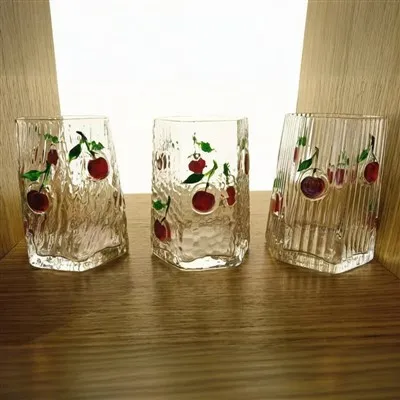
First, let’s get clear on what we’re talking about when we say “regular glass” vs. “specialty shaped glass.” Regular glass is almost always flat, produced in large, uniform sheets (think 3ft x 5ft or 8ft x 10ft panels) at a factory, then cut to straight edges and standard sizes. It’s mass-produced, so every sheet is identical, and there’s no customization beyond basic length or width. Specialty shaped glass, on the other hand, is anything that deviates from that: curved edges, angled cuts, holes drilled for hardware, textured patterns, or even complex, one-of-a-kind shapes like the rounded front of a vintage store display case or the curved windshields for a classic car restoration.
Let’s start with the biggest cost driver: production and material waste. Regular glass manufacturers run huge, continuous production lines that melt silica, soda ash, and lime into molten glass, then spread it into a flat, uniform sheet. The machinery for this is built for speed and consistency—they can roll out hundreds of sheets an hour, with almost no material wasted in the process. When you buy a sheet of regular glass, you’re paying for that high-volume, low-waste production.
Specialty shaped glass works the exact opposite way. We start with the same raw glass material, but once it’s cooled into sheets, it has to go through secondary processing: cutting, shaping, grinding, polishing. For simple shapes, like a circle cut out of a square sheet, there’s some waste, but it’s manageable. For complex shapes—say, a custom curved glass panel for a restaurant’s bar front, or a glass with multiple angled notches to fit around a door frame—that waste jumps way up. Last year, I had a client who needed a custom curved glass backsplash for a commercial kitchen. The shape was designed to fit exactly between two cabinets and an outlet, so we had to cut a large regular glass sheet, then grind and bend it to match that unique contour. In the end, almost 40% of the original sheet was wasted as offcut. That waste isn’t just extra material we have to dispose of—it means the cost of the remaining glass is spread across fewer usable pieces, so per square foot, it’s way more expensive.
Then there’s the labor and machine time. Regular glass is cut with automated CNC machines that can slice a straight line in seconds, no human touch needed for standard sizes. Specialty shaped glass? It requires specialized tools and skilled workers. For example, if you need a tempered curved glass panel (tempering is a key step for strength, especially for curved pieces), you can’t just pop it into a regular tempering oven. The oven has to be built to hold curved glass, and the shaping process before tempering requires very precise heat control—too much heat and the glass warps, too little and it won’t bend evenly. Our lead glass shaper has 18 years of experience, and even he’ll spend hours tweaking settings for a single custom curved piece, because one mistake means the whole sheet is ruined. For a client needing 10 identical specialty shaped glass panels, that labor adds up quickly. Regular glass, by comparison, is made in batches of thousands, so labor cost per unit is negligible.
Wait, but what about when volume is on your side? That’s a big point I make to clients. If you’re ordering 10,000 identical specialty shaped glass pieces for a new line of smartphones, the cost starts to level out. Because when you’re producing that many, you can invest in custom tooling—like a dedicated die for punching holes, or a specialized mold for bending curved glass—so the up-front tooling cost is spread across thousands of units, and the per-piece labor and waste drops. That’s why large corporations often use specialty shaped glass; for high-volume, consistent designs, it’s not as expensive as people think. The opposite is true for small orders: if you need one custom shaped glass piece for a single project, the cost will be much higher per unit than a sheet of regular glass, because there’s no way to spread the tooling or setup costs over many pieces.
Another factor people overlook is finishing and functionality. Regular glass almost always has straight, cut edges that are polished lightly, but not precision finished. Specialty shaped glass often requires specialized finishing: beveled edges (sloped, decorative edges that add strength and a fancy look), drilled holes for handles or hinges, sandblasted textures, or even tinted coatings applied only to specific parts of the glass. For example, a client opening a boutique jewelry store wanted display cases with glass that was clear in the center but tinted blue along the edges to make the silver jewelry pop. Doing that on regular glass would require masking and spraying, which is easy for flat surfaces, but on a curved specialty shaped panel, the masking has to be perfect to avoid overspray. That extra finishing step adds time and cost. And if you need the glass to have specific functionality—like being impact-resistant for a school hallway, or fire-rated for a commercial building—specialty shaped versions of that glass will always cost more than regular shaped ones, because the testing and certification process is harder for non-standard shapes.
But here’s the thing I always tell people: cost isn’t the only measure of value. Sometimes, paying a little more for specialty shaped glass saves you money in the long run. Let’s take an example: a small café I worked with last year. They originally planned to buy regular flat glass and cut it themselves for their counter, but the edges kept chipping, and the flat glass didn’t fit the curved counter they’d built. They tried hiring a local handyman to bend regular glass, but that resulted in weak, uneven curves that cracked after a few months. When they came to me, the cost of the specialty curved glass was 30% higher than what they’d expected to spend on regular glass, but it came pre-tempered, with polished edges that matched the counter exactly, and it had a 10-year warranty against cracking. In the end, they saved money because they didn’t have to pay for repairs or replacements, and the custom fit made their counter look way more professional, which helped them increase sales by about 15% that year.
I also get a lot of questions about comparing per-square-foot pricing. On average, regular clear glass costs between $5 and $15 per square foot, depending on thickness and quality. Specialty shaped glass, for small custom orders, can be anywhere from $30 to $150 per square foot, or even more for complex, high-strength shapes. But that’s just a baseline. For high-volume orders, specialty shaped glass can drop to $15 to $30 per square foot, which is only a small premium over regular glass. It’s all about how many you need, and how complex the shape is.
Another hidden cost with regular glass: fit issues. If you cut regular glass yourself to fit a non-standard space, odds are it’s not going to fit perfectly, leading to gaps, drafts, or even safety hazards. For example, a homeowner I worked with wanted to replace a broken window in their old cottage, which had a unique curved top. They tried to buy regular glass, cut it to fit, but it was ¼ inch too short on one side, so they had to caulk it, and within a year, the glass cracked from temperature changes. The specialty shaped curved glass I made for them cost twice as much as the regular glass they’d first tried, but it fit exactly, didn’t need caulk, and has held up for 6 years with no issues. When you factor in the cost of mistakes, time spent cutting and fitting, and replacements, specialty shaped glass often ends up being the more economical choice in the long term.
I’ll be honest, there are times when regular glass is definitely the better option. If you’re making a simple bookshelf, or a basic picture frame, or repairing a standard window, regular glass is cheap, easy to find, and works perfectly. But when you have a unique project—whether it’s a custom shower enclosure, a storefront display, a classic car restoration, or a piece of custom furniture—specialty shaped glass isn’t just a luxury, it’s often necessary.
At the end of the day, the cost comparison comes down to three things: volume, complexity, and long-term value. If you need one simple shape, regular glass is cheaper. If you need a complex shape, in high volume, or you want something that will fit perfectly and last, specialty shaped glass is worth the investment.
If you’re working on a project that requires custom shaped glass, and you want an accurate, no-pressure cost breakdown tailored to your needs, don’t hesitate to reach out. I’ve worked with every kind of project, from small residential repairs to large commercial builds, and I can help you figure out the best solution for your budget and goals.
Wine Glass References
- Glass Packaging Institute. (2022). "Specialty Glass: Manufacturing Processes and Cost Drivers". GPI Technical Bulletin.
- Architectural Glass and Metal Association. (2021). "Cost Comparison of Standard vs. Custom Shaped Glass for Commercial Applications". AGMA Industry Report.
- U.S. Department of Energy. (2020). "Energy Efficiency of Custom Fitted Glass in Residential and Commercial Buildings". Building Technologies Office Publication.
- Smith, J. (2023). "Curved and Custom Glass: Labor and Waste Cost Analysis for Small Batch Producers". Journal of Glass Manufacturing and Technology.
Nexus Household Co., Ltd.
As one of the most experienced specialty shaped glass manufacturers and suppliers in China, we also support custom service. Please feel free to wholesale high quality specialty shaped glass for sale here from our factory. For free sample, contact us now.
Address: Room0101, 1st Floor, Unit 3, Building 3005, No. 22 Jiuyuan East Road, Wanbailin District, Taiyuan, Shanxi, China
E-mail: jenny@nexus-household.com
WebSite: https://www.nexus-household.com/
