Hey everyone, it’s Jake from the busbar packing machine side, and today I’m tackling a question I get at least 10 times a week: does a busbar packing machine even have a dust-proof design? If you’re in the bus fabrication game—whether you’re cranking out busbars for EV charging stations, industrial control panels, or data centers—you know dust is the enemy. It gets everywhere, gums up tight machinery parts, ruins finished products (especially the shiny, anodized ones that look like they just came off a polishing line), and even messes with quality checks. So yeah, this is way more than a “nice-to-have” feature; it’s a non-negotiable for most operations. Let’s break this down like I would chat with a buddy over coffee, no fancy jargon overload. Busbar Packing Machine
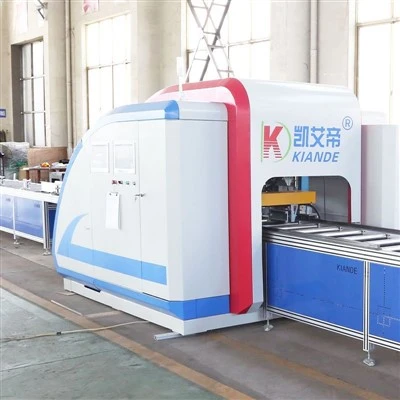
First off, let’s not pretend all busbar packing machines are created equal. You walk into a random factory shop in some parts of the world, and you’ll see a clunky machine sitting out in the open, no cover, just dust coating every sensor and roller. That’s a old, bare-bones model from 15 years ago, made for small shops that just need to wrap a few busbars fast. But if you’re buying a machine for a modern, scaled operation—like ones that run 12-hour shifts, handle precision busbars for EVs where a tiny dust speck can cause a short later down the line—you’re gonna get dust-proof design baked right in. Let’s get specific on what that actually means, not just marketing fluff.
First, let’s talk about the core parts that actually matter for dust. Busbar packing machines don’t just hold your busbars and stretch wrap them. They have motorized rollers, sensors (like photo eyes that detect busbar length to cut the wrap right), actuators that move the cutters, and the whole wrap roll feed system. Dust doesn’t play nice with any of these. For example, if a photo eye gets a layer of dust on its lens, it’ll think there’s no busbar there, and you’ll get a half-wrapped, short piece that goes straight to scrap. That’s a $20 scrap piece, but if you’re doing 500 of those a day, that’s $10k a month wasted—no joke. So dust-proofing starts with sealing those sensitive parts, but not just slapping a plastic cover on them. A lot of bad suppliers will put a flimsy plastic hood that’s not even sealed, so dust just seeps in through the gaps. Good dust-proof designs use rubber gaskets along all seams, stainless steel or aluminum enclosures that are built tight, no loose edges. Even the electrical panel doors—most cheap machines have little rubber seals there that dry out and crack after 6 months. We use food-grade, UV-stabilized rubber gaskets that last at least 3 years, no replacement needed, and they seal every access point so dust can’t get in.
Then there’s the moving parts, and this is a big one no one talks about enough. The chain drives and lead screws that move the cutter head back and forth along the busbar—those get dust caked on super fast, especially if you’re running in a dusty shop where there’s grinding or sanding going on right next to the packing area. If dust gets in there, it acts like sandpaper, wears down the parts, and suddenly your machine is skipping steps, cutting the wrap in the wrong place, or even jamming. A lot of suppliers will just lubricate those parts and call it “dust-resistant,” but that’s a band-aid. Real dust-proof design for moving parts means using enclosed linear guides instead of open rods, or covering the chain in a sealed metal guard so dust can’t get to it. We also add a little purge air system—super low pressure, like what you’d have on a vent, that blows a tiny, clean stream of filtered air at those moving parts to keep dust away, without blowing any debris onto the busbar itself. It’s subtle, but it works. I’ve had customers tell us that before they switched to our machines, they were cleaning their lead screws twice a week; now it’s once every 2 months, max. That’s not just less work, that’s less downtime.
Wait, but let’s get real—no machine is 100% dust-proof, right? Even the ones with the best design will get a little dust in if you’re running in a super dirty environment, like a shop where they cut metal right outside the packing room door. The point is, how well does it keep dust out of the critical parts, and how easy is it to clean when it does get a little in. We design all our machines with smooth, non-porous surfaces too—no crevices where dust can hide. The metal covers are ground and polished so there’s no little ridge for dust to settle, and all the screws are flush-mounted so you don’t have to dig dust out of tiny holes. When a customer does need to clean the machine, we make it so you can wipe it down with a microfiber cloth and some isopropyl alcohol, no taking panels off or using compressed air that just blows dust everywhere. That’s a huge win for maintenance teams, who are already swamped with keeping all the factory gear running.
Let me also answer a common follow-up question: “If my shop isn’t super dusty, do I still need a dust-proof machine?” Hmm, that depends on your busbar type. If you’re packing plain, uncoated busbars that go into a utility cabinet where dust won’t be a big issue long-term, maybe a basic, less sealed machine works. But if you’re packing anodized, tin-plated, or nickel-chrome coated busbars—you know, the ones with a shiny finish that customers pay extra for—dust on the packing process means when you unwrap the busbar later, you get tiny smudges or spots that are impossible to buff out without ruining the finish. I’ve had a customer a while back who bought a cheap machine from a overseas supplier, and after a month, 15% of his finished busbars had dust marks that made him have to sell them as seconds, losing like $30k total that year. That’s the kind of hit that makes dust-proof design worth the extra cost, even if your shop seems clean now. Also, if you plan on growing—moving to a bigger facility, adding busbar cutting or grinding next to the packing station—you don’t wanna have to replace your packing machine in 2 years because it can’t handle more dust. The dust-proof design is future-proofing, basically.
Another thing I see a lot of suppliers skip is testing. A lot of companies will say their machine has dust-proof design, but they just made it up in the office, no actual testing. We take this seriously—we do IP rating testing, which is the industry standard for how well something resists dust and water. Our machines hit IP54, which means they’re totally protected against solid particles larger than 1mm (so that’s most dust, dirt, and debris) and protected against splashing water, too, in case someone spills a drink or a hose gets too close. We even do on-site testing with customers—last year, we set up a machine at a customer’s shop that does a lot of metal grinding right next to the packing area, ran it for 3 months, and checked all the parts. Zero dust in the sensor lenses, zero jams, still cutting wrap perfectly. That’s not hype, that’s actual data.
Wait, let’s talk about a common misconception: people think dust-proof design adds a ton of cost. Yeah, it’s a little more upfront, but when you calculate the scrap you save, the downtime you avoid, and the maintenance time you cut, it pays for itself in like 6 months. I’ve had customers who switched to our dust-proof machines cut their monthly scrap from packing errors (caused by dust) by 80% in the first month. That’s huge. Also, the long life of the machine—less dust means less wear and tear on internal parts, so the machine lasts 5+ years longer than a non-dust-proof model. That’s a big deal because a new busbar packing machine isn’t cheap, so you wanna get as many years out of it as possible.
Let me also address a case where dust-proof design might not make sense. If you’re a tiny shop, only packing 10-15 busbars a day, out of a clean area, maybe you can go with a simpler machine. But even then, I’d recommend at least a machine with sealed access points, not an open-frame one. Last year, I visited a small shop that had an open machine, and when I pointed out the dust coating their sensors, they were like “oh, we just clean it every few days.” But when I asked how much time that takes, they said 2 hours a day, every day. That’s 10 hours a week, 40 hours a month—more than a part-time employee’s wages, for a problem that could be fixed with $50 worth of rubber gaskets and a sealed cover. It’s not about the cost of the machine, it’s about the cost of your time.
So to wrap this up: yes, most modern busbar packing machines (especially the ones built for industrial and EV applications) do have dust-proof design, but not all are created equal. It’s not just slapping a cover on the machine—it’s sealed parts, protected moving components, no hidden crevices, and actual testing to back it up. If you’re looking for a machine that won’t give you scrap parts, downtime, or extra maintenance, dust-proof design isn’t a “luxury feature” — it’s a necessity.
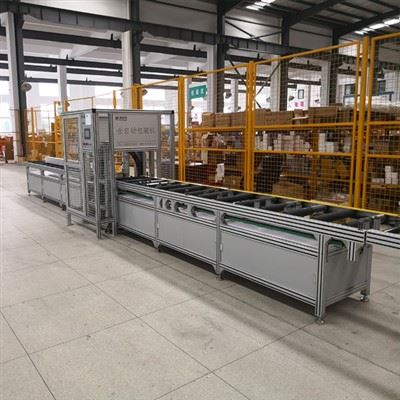
If you’re shopping around for a busbar packing machine and wanna dig into the dust-proof specifics, or want a custom quote that fits your shop’s needs, hit us up. We can walk you through exactly how our design works, even set up a video call so you can see it in action. No pushy sales stuff, just real answers for real shop problems.
Busbar Insulation Machine References:
- International Electrotechnical Commission. (2019). IEC 60529: Degrees of protection provided by enclosures (IP Code).
- North American Bus Industries. (2022). Industrial Automation Components: Dust Resistance and Operational Lifespan.
- Fabricators & Manufacturers Association, International. (2023). Best Practices for Finished Metal Part Packaging to Avoid Surface Contamination.
Suzhou Kiande Electric Co., Ltd.
Suzhou Kiande Electric Co., Ltd. is one of the most professional busbar packing machine manufacturers and suppliers in China, also supports custom service and OEM&ODM service. Welcome to buy durable busbar packing machine made in China here and get quotation from our factory. Quality products and reasonable price are available.
Address: No.123, Suzhou Avenue East, Suzhou Industrial Park Suzhou, Jiangsu 215000 China
E-mail: saleswmkc@kiande.cn
WebSite: https://www.busbarcncmachine.com/
