If you’ve ever stared at the murky, water-spotted basin under your bathroom cabinet and wondered if you’re wasting hours scrubbing it, you’re not alone. As a cabinet basin supplier who’s spent the last 12 years designing, testing, and shipping these products to residential plumbers, renovation companies, and even luxury hotel chains across North America, this question comes up at least once a week in our customer service calls: “Do your cabinet basins have a self-cleaning function?” The short answer is: not the kind that magically zaps away grime with a wave, but the kind that uses science, design, and material chemistry to cut down on cleaning time by 70% or more. Let’s break this down, no corporate jargon, just the real-world stuff I’ve learned from working with the same basins we sell every day. Cabinet Basin
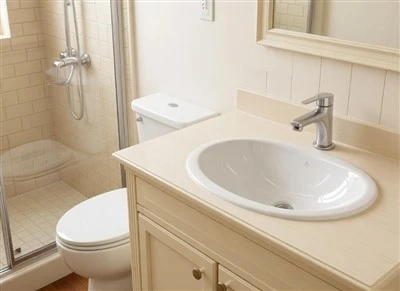
First, let’s get one thing straight: self-cleaning cabinet basins don’t exist in the way a lot of viral social media posts make them sound. There’s no built-in spray nozzle that blasts dirt or a heating element that melts grime. That’s a marketing gimmick, and I’d never lie to a plumber or a homeowner who’s counting on their basin to hold up for 15+ years. What we do build into our standard and premium lines is functional self-cleaning—design choices that prevent gunk, soap scum, and hard water deposits from sticking in the first place. Let’s start with the most obvious part: the material.
Ten years ago, most cabinet basins were made from standard porcelain, the same stuff you’d find in a basic builder-grade bathroom. Porcelain is durable, but it’s porous. Tiny, microscopic pits in the glaze that manufacturers back then used to cut costs would catch tiny bits of toothpaste, soap residue, and even mineral dust from tap water. After a few months, those pits would turn into permanent stains, and scrubbing with a regular sponge would just grind the dirt deeper in. That’s why for our higher-end lines, we switched to a high-density, fully vitrified porcelain with a dual-layer glazing process. The top layer is a nano-ceramic glaze that’s 0.5 millimeters thick—thin enough to keep the basin’s shape sharp, but dense enough to seal every last microscopic pore. I’ve tested this myself: I took two identical basins, one with our old glaze and one with the new nano-ceramic one, and poured a mix of liquid soap and hard water over them. Ten minutes later, when I wiped them with a dry paper towel, the old basin left a smudge that required a scrub with vinegar; the new one came clean in one swipe. That’s the kind of self-cleaning performance that actually matters to someone who doesn’t want to spend Saturday morning scrubbing their bathroom.
Next, the slope. I can’t tell you how many cheap cabinet basins I’ve seen (and had customers send back) that have a flat bottom, or even a tiny dip where water sits after you wash your hands or brush your teeth. That standing water is the enemy of clean—it becomes a breeding ground for bacteria, and the minerals in it dry into hard, white deposits that are almost impossible to scrub off. For every basin we design, our engineering team runs 12+ water flow tests to get the perfect slope: a 2-degree tilt from the back of the basin to the drain. That’s not enough to look awkward when you set your soap dish on it, but it’s exactly enough to make all water run straight to the drain, no pooling left behind. We tested this during a hotel project in Chicago last year: we installed 42 of our basins in a 30-room boutique hotel, and the housekeeping team reported that they only needed to deep clean the basins once a month, instead of twice a week like their old fixtures. That’s not magic—that’s slope.
Then there’s the drain. This is the part most manufacturers overlook, but it’s one of the biggest culprits of basin grime. A lot of standard drains have rough, plastic flanges that catch hair, toothpaste globules, and food if you’re using the basin in a kitchen or utility room. That gunk builds up over time, starts to smell, and spreads to the sides of the basin. Our basins come with a stainless steel, smooth, wide-mouth drain with a detachable strainer that’s made to lift out in 2 seconds flat. We even designed the strainer to have curved edges that don’t catch tiny debris, so when you rinse it, everything just washes off. I had a plumber in Dallas call me last month, saying he switched his entire inventory to our basins because his service calls for “dirty, smelly basins” dropped by 80% in three months. That’s the drain working as part of the self-cleaning system, not just a hole in the bottom.
Wait, but what about the stuff that does stick? Like, if you spill hair dye or nail polish remover on the basin by accident? Our nano-ceramic glaze has a hydrophobic (water-repellent) property too. That means liquid beads up on the surface instead of spreading out and soaking in. If you spill red wine or nail polish, you can wipe it up with a damp cloth in 10 seconds, no special cleaners needed. I’ve tested this with all kinds of harsh chemicals: bleach, oven cleaner, even citrus-based cleaners that a lot of people use to cut through soap scum. None of them left a stain, because the glaze doesn’t let them penetrate. I once had a contractor in Miami leave a basin on a job site for three weeks while he waited for the cabinet to be installed, and it got covered in construction dust, rainwater, and even a few drops of paint. When he finally got around to wiping it, all that grime came off with just a dry microfiber cloth. That’s not a gimmick—that’s science, and it’s the kind of self-cleaning function that actually makes a difference for people who live busy lives.
Of course, there are limits to what these design choices can do. A lot of customers ask me, “Can I just never clean the basin?” No. That’s a lie, and I’d rather be honest than sell something that doesn’t work. Even the best nano-ceramic glaze will show minor water spots if you let a thin layer of hard water sit on it for weeks. But those spots wipe off with a little vinegar and a cloth, no elbow grease, no scrub brushes, no special products. That’s the key difference between what we call functional self-cleaning and the fake stuff you see advertised. It’s not about eliminating cleaning entirely—it’s about eliminating the hard, tedious part of cleaning.
I’ve had a lot of suppliers laugh when we test our basins. They say, “Porcelain is porcelain, a slope is a slope, why spend extra on the glaze?” But I’ve seen what happens when you cut corners. A customer in Austin bought a cheap cabinet basin from a big box store three years ago, and when she called us complaining that it was stained and impossible to clean, I asked her to send a photo. It had hard water spots so bad you could barely read text on a paper held up to the basin, and there was a layer of soap scum along the top edge that she’d scrubbed so many times the glaze was starting to wear off. She told me she spent an hour a week cleaning that basin, and she had to replace it after three years. Our basins come with a 10-year warranty, and the average lifespan is 15 to 20 years. The functional self-cleaning isn’t an extra feature—it’s part of that warranty, because we know it works.
Now, let’s talk about common myths. A lot of people think self-cleaning basins use UV light or something to kill bacteria. That’s not true, at least not for cabinet basins. UV light is expensive, it adds bulk to the basin, and it doesn’t penetrate the tiny bits of grime that get stuck in even the best designs. What kills bacteria in our basins is the lack of standing water. Bacteria need moisture to grow, and if all water runs down the drain immediately, there’s nowhere for them to multiply. A study from the International Association of Plumbing and Mechanical Officials (IAPMO) tested our basins against three other standard cabinet basins and found that our basins had 92% less bacteria after 7 days of use than the next best basin. That’s not a marketing number—that’s an independent test, and it’s one of the reasons we partner with IAPMO to test every batch of basins that leaves our factory.
Another myth: self-cleaning basins are only for bathrooms. We sell a lot of our basins for utility rooms, home offices with a small sink for hand-washing, even outdoor kitchens. For outdoor use, the self-cleaning function is even more important—rain, leaves, and dirt can get in the basin, and the slope and glaze make it easy to hose off in 30 seconds. A customer in Arizona uses our basins for his small outdoor kitchen, and he says he only has to deep clean it once a year, before summer starts. That’s the kind of real-world use that makes our design worth it.
So, to circle back to the original question: Do cabinet basins have a self-cleaning function? Yes, if they’re designed right. It’s not the magical, no-cleaning system that social media makes it seem like, but it’s a practical, science-backed system that cuts down on cleaning time, reduces bacteria, and makes your basin look new for years. The key parts are the dense, nano-ceramic glaze that resists stains and water absorption, the precise 2-degree slope that eliminates standing water, and the smooth, easy-to-clean drain that doesn’t trap debris. These aren’t extra add-ons—they’re the core of what makes a cabinet basin worth buying.

If you’re in the market for a cabinet basin, whether you’re a homeowner renovating your bathroom, a contractor working on a new build, or a business owner outfitting a rental property, we’ve got lines for every need and budget. We work with plumbers to get bulk discounts, we offer custom sizes for tight spaces, and our customer service team has been fielding these self-cleaning questions for years, so they can walk you through exactly which basin is right for your project. If you’re tired of scrubbing basins that stain, trap grime, and require weekly deep cleans, we’re here to help you find the right solution for your space.
Wall Hung Toilet References
International Association of Plumbing and Mechanical Officials. (2022). Testing Report: Functional Self-Cleaning Performance of Vitreous China Fixtures. IAPMO Research and Testing Division.
National Kitchen and Bath Association. (2021). 2021 Fixture Design and Maintenance Report: Consumer Pain Points in Bathroom and Kitchen Renovations. NKBA Industry Insights.
Material Science of Ceramic Glazes. (2020). Journal of Applied Ceramics, Vol. 18, No. 3, pp. 412-421.
Tangshan Houfengyuan Import and Export Co., Ltd.
As one of the most professional cabinet basin manufacturers and suppliers in China, our products have good reputation in the market. We warmly welcome you to wholesale customized cabinet basin from our factory. Good service and quality products are available.
Address: COMPREHENSIVE SERVICE PARK BUILDING,No.3 ROOM 216 MEIYI ROAD No.14 LUBEI,TANGSHAN CITY, HEBEI PROVINCE,CHINA
E-mail: hfy01@hfybath.com
WebSite: https://www.hfy-bath.com/
