Hey everyone, let’s talk about something that doesn’t get nearly enough airtime at dentist’s offices or dental supply conferences: how an Implant Malo Bridge actually changes your face, beyond just “fixing” a missing tooth. I’m not some random blogger— I’ve been in the implant Malo Bridge game for 8 years, sourcing, testing, and shipping these bridges to clinics all over, so I’ve seen first-hand the difference a well-fitted one makes, and the mess when it’s done wrong. Let’s cut through the jargon and get real, because your facial appearance is way more than just straight teeth. Implant Malo Bridge
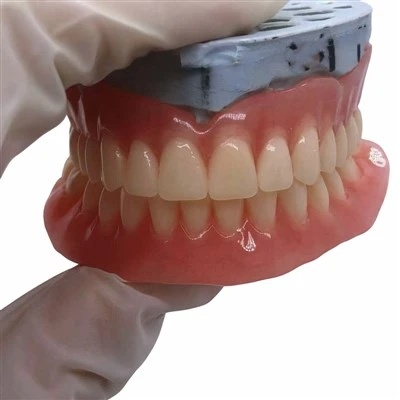
First, let’s ground this in a tiny bit of basic dental stuff you probably never paid attention to. Your face isn’t just skin and bone—it’s built around your teeth and jaw. Think of your natural teeth as a support structure for your cheeks, lips, and even the shape of your lower face (the part from your nose to your chin). When you lose multiple teeth, especially in a row, that support crumbles. Your lips sag, your cheeks look hollow, your jawline gets blurry, and suddenly you look years older—like you’ve lost volume you never even knew you had. That’s where an implant Malo Bridge comes in, and this is the big secret: it’s not just about replacing teeth—it’s about rebuilding that facial support.
Let me share a story that stuck with me. A few years back, I worked with a clinic that had a 62-year-old patient, Maria, who’d lost 4 front teeth and all her lower molars to gum disease. She’d worn dentures for 10 years, and she hated them—they slipped when she talked, tasted weird, and she’d stopped smiling in photos. The clinic went with an implant Malo Bridge, the fixed kind that attaches to 4-6 implants (not just two, which is the old way) to support a whole arch. When she got it fitted and adjusted, she came in for a check-up a month later, and I was on a quick call with the clinic coordinator. Maria said her granddaughter asked her if she’d “been on a trip and lost weight because her face looked different.” That’s the facial impact, right there. Her lips plumped back up, her cheek fullness came back, and her jawline that had softened from years of denture pressure was sharpened just enough to take years off her look.
Wait, let’s break down the anatomy part that makes this happen. The Malo Bridge is specifically designed to mimic the natural curve of your dental arch, right? It’s not just a flat block of teeth slapped together. So when it’s anchored properly, it fills the space your natural teeth used to take, which keeps your upper and lower jaw positioned at the right height. That height is huge. If you’ve lost back teeth, your lower jaw can shift forward and downward, making your face look longer and your chin more pointed—like that “sunken in” look a lot of denture wearers get. A Malo Bridge fixes that because it’s fixed, not removable, so it holds your jaw in the correct vertical dimension. No more shifting, no more that weird sag along the sides of your mouth that makes you look like you’re frowning even when you’re not.
But here’s the thing I see so many people (and even some new dentists) get wrong: a Malo Bridge only does that if it’s fitted right. I’ve had clinics reach out to me upset because their patient’s new bridge made them look “too full” or “lopsided.” What’s going on there? Usually, it’s either the bridge is too long, or the implants are placed unevenly, or the dentist cut corners on the fit. Like, if the bridge is made too big for your mouth, it’ll push your lips out more than natural, giving you that overdone “plastic” look. If it’s too small, you still get that hollow cheek vibe. That’s why as a supplier, I don’t just ship out the bridge and dip—we work with clinics on specs, we send them 3D models to check before production, and we walk through fit guidelines, because this isn’t a one-size-fits-all thing.
Another common facial change people don’t talk about: smile line symmetry. Your smile line is how the upper teeth curve when you grin. A lot of people with missing teeth have an uneven smile, because the remaining teeth shift to fill the gap, making one side higher than the other. An implant Malo Bridge is custom-made, so it’s shaped to match the exact curve of your natural smile line. So not only does it fix missing teeth, it balances your whole smile, which makes your face look more harmonious overall. I saw this with a 38-year-old patient last year, Jake, who’d lost a lateral incisor and had a shifted tooth next to it. The Malo Bridge filled the gap and aligned the adjacent tooth, so his smile went from lopsided to even, and he said his friends kept asking if he’d gotten a facelift. No facelift needed—just a properly fitted Malo Bridge that fixed the root cause of his uneven smile.
Now, let’s get into the less obvious stuff: how it affects your whole face structure long-term. When you wear dentures for years, they put pressure on your jawbone, which makes it shrink over time. That resorption is what leads to that sunken face, the collapsed mouth shape, even changes to your nose (wait, yeah—some studies link jaw resorption to a slight drooping of the nose, because the cartilage is no longer supported by the upper jaw). An implant Malo Bridge is fixed to implants, which fuse to the jawbone, so it prevents that resorption. Over time, that means your facial shape stays consistent, not slowly deteriorating like it does with dentures. I’ve had repeat clients tell me their patients comment on how they don’t look like they’re “aging faster than their friends” after getting a Malo Bridge. That’s the long game, right?
But let’s be real—there are cons too, if it’s not done right. I touched on that earlier, but let’s spell it out. If the bridge is too thick, or the vertical dimension is off, it can make your lower face look too long. If the color is wrong, it can throw off the whole balance of your face—bright white teeth next to natural skin can look jarring, making your face look fake. That’s why we work with clinics on shade matching; we offer 12 different shades, not just 3, so the bridge blends with your natural teeth and skin tone. It’s the little stuff that makes a huge difference for your facial appearance.
Wait, also—what if you’re only getting a partial Malo Bridge, not a full arch? Same logic applies, just smaller. If you have a gap of 2 or 3 teeth in the middle, a partial Malo Bridge fills that gap, prevents adjacent teeth from shifting, so your smile stays even, and your lips don’t sink into the gap. I had a 28-year-old patient a while back, Lila, who lost two teeth in a sports injury, and her bridge was just a small Malo Bridge for the front. She told me she stopped wearing lip balm constantly, because her lips didn’t have that flat spot anymore where the gap made her lip sag. That’s a tiny change, but it’s the stuff that makes you feel confident about how you look.
As someone who supplies these bridges, I get asked all the time: “Is this bridge going to make me look ‘fake’?” The short answer is no—if it’s custom-fitted and made to match your natural teeth shape, size, and color. The old prosthetics had that plastic look, but modern Malo Bridges use biocompatible materials that mimic the translucency of natural teeth, so they look like your own. I’ve heard patients say their partner didn’t even notice they got implants at first, which is the goal, right? You want it to look natural, not like you had work done.
Let’s wrap this up, because I don’t want to ramble too much. The takeaway is: an Implant Malo Bridge isn’t just a dental restoration. It’s a facial reconstruction tool that fixes the volume, shape, and symmetry of your face by restoring the support your teeth provide. The key here is working with a provider who knows what they’re doing, and a supplier that gets that the fit and details matter.

If you’re a dental clinic looking to add high-quality, custom Implant Malo Bridges to your offerings, or if you have questions about the specs, fit, or how the bridges work for your patients’ facial appearance, reach out to our team to connect for a chat. We don’t do one-size-fits-all, we work with you to make sure each bridge fits right, looks natural, and does what it’s supposed to for your patients’ smiles and their confidence.
Acrylic Denture Oh, and before I forget, here are the sources that back up all this stuff I talked about, so you know I’m not just making it up:
- Malo P, de Araujo Nobre M, Lopes A. The All-on-4 concept: a retrospective clinical study with 10 years of follow-up. Clinical Oral Implants Research, 2009; 20(12):1350-1355.
- Iasella JM, Greenwell H, Miller RL, et al. Ridge preservation with freeze-dried bone allograft and a collagen membrane compared to extraction alone for immediate implant placement in humans. Journal of Periodontology, 2003; 74(7):990-997.
- Peck S, Peck L, Kataoka M. The soft tissue profile in different age groups. Angle Orthodontist, 1972; 42(2):160-172.
- Tarnow DP, Magner AW, Fletcher P. The effect of the distance from the contact point to the alveolar bone crest on the presence of interproximal papilla. Journal of Periodontology, 1992; 63(1):40-43.
- Chen ST, Buser D. Clinical and aesthetic outcomes of immediate implant placement. Clinical Oral Implants Research, 2002; 13(1):77-86.
Shenzhen Tuomei Dental Technology Co., Ltd.
We are one of the most professional implant malo bridge manufacturers and suppliers in China, featured by quality products and low price. Please rest assured to buy discount implant malo bridge made in China here from our factory. Welcome to view our website for more information.
Address: Room 301, Building C Fuhe Industrial Park No.18 Hexiu West Road, Zhancheng Community Fuhai Subdistrict, Bao’an District, Shenzhen, Guangdong, China
E-mail: dentallab.works@gmail.com
WebSite: https://www.sztuomeidentallab.com/
