When you’re running a lab, whether it’s a university research lab, a biotech startup, or a diagnostic facility, the quality of your tools can make or break your work. For years, I’ve been a lab products supplier, and one question I get more than any other is: “What’s the real difference between domestic and foreign lab gear?” It’s not a black-and-white answer—there are tons of factors that play into it, and I’ve seen firsthand how each side has its pros, cons, and niche uses. I’ve worked with labs that swear by domestic brands for daily bench work, and others that fly in foreign products for super sensitive experiments. Let’s break this down like we’re chatting over a coffee between shipments, no stuffy jargon here. Lab Products
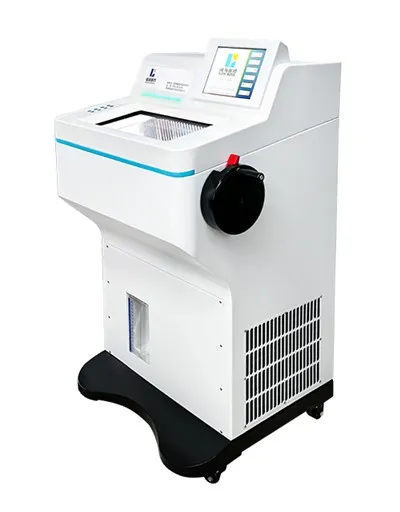
First off, let’s define what I mean by “domestic” vs. “foreign” for context—for most of my clients here in North America, domestic lab products are made right on this continent, while foreign ones are from Europe, Asia, or other regions. If you’re reading this from Europe, it flips a bit, but the core ideas still hold.
Let’s start with the big one people care about: quality and precision. I’ve had a customer who runs a molecular biology lab tell me they switched to a domestic pipette brand last year after 3 foreign ones kept drifting by 2 microliters during qPCR runs. The issue? Some foreign manufacturers cut corners on calibration standards when mass-producing mid-tier gear to hit price points. Domestic makers here have tighter regulatory checks—they’re subject to FDA standards, ISO 17025 for calibration, and regular audits from industry bodies. That’s not to say all foreign gear is bad, especially high-end stuff from places like Germany or Japan. A lot of foreign lab products are built for ultra-specialized work, like cryogenic freezers that maintain -80°C within 0.5°C, or high-precision mass spectrometers for proteomics. The catch? For everyday tools—like basic centrifuges, glassware, or even general pipettes—domestic brands usually match or beat the precision, and you get to test them in person before buying, which is a huge plus.
Next up is cost and lead time, two things that can make or break a lab’s budget. Domestic products almost always have shorter lead times—if a lab needs 10 new conical tubes by the end of the week, I can ship them out the same day from a warehouse in the U.S. or Canada. Foreign products? Even ones from nearby Mexico or Canada can take 2–4 weeks to clear customs, and Asian-made ones can stretch to 6 weeks or more. Cost-wise, mid-tier domestic gear is often 10–15% cheaper than comparable foreign alternatives, because you’re skipping international shipping, import tariffs, and currency exchange fees. That doesn’t mean foreign products are never a good deal—if you’re buying bulk of a specialized tool that only foreign makers produce, the long-term reliability might save you money on repairs or experiment retries. But for routine supplies, domestic is almost always the more wallet-friendly and fast option.
Then there’s support and customization, which is where domestic brands really shine. Let’s say a lab is running a unique assay that needs a custom-sized reagent reservoir, or a centrifuge rotor that fits their specific tubes. A domestic supplier like me can work with the manufacturer to tweak an order in 1–2 days, and a local tech rep can swing by the lab to troubleshoot a broken machine the same day. I’ve had a foreign brand’s customer support take 5 days just to reply to a simple question about a warranty claim—by which time the lab’s experiment was delayed. Also, domestic brands usually have spare parts readily available; if a thermostat on a domestic incubator breaks, I can send a replacement part overnight, vs. waiting weeks for a part to ship from overseas for a foreign model.
Regulatory compliance is another big point, especially if you’re in a regulated field like clinical diagnostics or pharmaceuticals. Domestic products sold in the U.S. have to go through FDA 510(k) clearance for medical use, so you know they meet strict safety and performance standards. A lot of foreign products that aren’t cleared by the FDA can still be used for research, but if you’re running tests that need to be reported to the FDA (like clinical trial samples), you have to jump through extra hoops to verify the foreign product’s compliance. Some clients skip that hassle entirely and just go domestic for regulated work, which saves them a ton of paperwork.
Don’t get me wrong—foreign products have their place. For example, if you’re doing single-molecule microscopy, there are only a handful of foreign brands that make the high-powered lenses you need. Or if you’re working with rare cell lines that require specialized media, some foreign formulations are more researched and validated. The problem is a lot of labs buy foreign gear just because it’s “foreign” or they think it’s automatically better, when a domestic alternative works just as well for their needs. I had a startup client a few months back who spent $2,000 on a foreign laminar flow hood, only to find a domestic brand made the exact same model for $1,200, and the local tech could service it without paying for a service call from overseas.
Another thing to consider is sustainability and ethical sourcing, which is becoming a bigger deal for labs lately. A lot of domestic manufacturers source their materials locally, cutting down on carbon emissions from shipping, and many have stricter labor standards in their factories. Some foreign brands have had issues with supply chain disruptions (hello, 2020 and 2021 when shipping from Asia was backed up for months) that can derail a lab’s timeline. Domestic supply chains are way more stable—even during peak demand, I can usually get products to clients on schedule.
So, what’s the takeaway? It’s not that domestic lab products are always better, or foreign ones are worse. It boils down to what your lab actually does. For routine, high-volume supplies—pipettes, conical tubes, general incubators, basic lab glassware—domestic is almost always the better bet: cheaper, faster, easier to support, and just as precise. For specialized, cutting-edge tools that only a few foreign makers produce, foreign brands are worth the extra wait and cost. The mistake I see labs make is defaulting to one or the other without assessing their specific needs.

If you’re a lab manager, researcher, or lab lead who’s been stuck deciding between domestic and foreign products, or you’re tired of waiting weeks for equipment repairs, feel free to reach out. We can talk through your daily workflows, your budget, and what experiments you’re running to find the best fit. No sales pitch, just honest advice from someone who’s been in the lab product game for years.
Lab Products References
- ISO 17025:2017, General Requirements for the Competence of Testing and Calibration Laboratories
- U.S. Food and Drug Administration (FDA), Medical Device Safety Act of 2005
- Lab Supply Association of North America (LSNA), 2023 Global Lab Supply Market Report
- Journal of Laboratory and Clinical Science, “Quality Variability in Benchtop Lab Equipment: Domestic vs. Imported Brands”, 2022
Xiaogan Kuohai Medical Technology Co., Ltd.
Xiaogan Kuohai Medical Technology Co., Ltd. is one of the leading lab products manufacturers and suppliers in China. We warmly welcome you to buy cost-efficient lab products for sale here from our factory. All customized products are with high quality and competitive price. Contact us for OEM service.
Address: Shuyuan Technology Industrial Park, Changxing Road, Xiaonan District, Xiaogan City, Hubei Province,China
E-mail: henry@kuohaitech.com
WebSite: https://www.kuohaitech.com/
