If you’ve ever wandered around a nursery, a residential construction site, or your own backyard, you’ve probably spotted a garden cart hauling everything from soil bags and garden tools to rotting pumpkin remnants from a fall harvest. But what about the big, heavy stuff—like a large planter full of mature plants, soil, and decorative rocks? As a garden cart supplier who’s spent years talking to landscapers, home gardeners, and nursery managers, this question comes up more than you’d think. More often than not, the answer is a resounding yes—but it’s not just about tossing a heavy planter onto a cart and hoping for the best. There’s a science to matching your cart’s design to the planter’s size, weight, and the terrain you’re moving over, and a few key tips to avoid accidents, damaged plants, or broken gear. Garden Cart
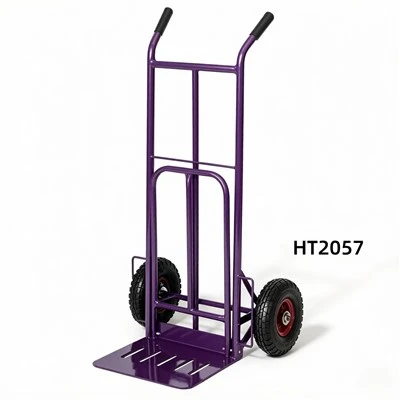
Let’s start with the numbers, because garden carts aren’t one-size-fits-all. A standard steel garden cart, the kind most people reach for first, usually has a weight capacity between 300 and 500 pounds. That’s more than enough for a 20-gallon large planter, which typically holds 150 to 250 pounds of soil, plants, and gravel drainage. But if you’re moving a 50-gallon commercial planter (often used for patios, commercial landscaping, or event spaces) that can weigh 500 to 800 pounds when filled, you’ll want to step up to a heavy-duty cart with a 1,000-pound or higher capacity. I’ve seen too many gardeners try to cram a 600-pound planter into a standard cart, only to bend the axle, flatten the tires, or worse—tip the cart mid-move. That’s not just a hassle; it can crack the planter, kill expensive perennials or shrubs, and even lead to back injuries if you’re left to clean up the mess.
Terrain matters too, and it’s something most suppliers (including ours) factor into cart design. If you’re moving across flat, paved patios or sidewalks, basic pneumatic tires will work fine for large planters. But if you’re moving over uneven grass, mulch beds, or rocky garden paths, you need larger, thicker tires—think 13 inches or more, instead of the 8 to 10 inches on standard carts. Those bigger tires have better traction and can roll over small bumps without jostling the planter. I remember a customer last year who bought a standard cart to move two 400-pound planters across her sloped backyard; her cart’s small tires got stuck in the mulch, and she ended up calling a friend to help haul them. That’s a preventable mistake, and it’s why we always ask customers about their main moving terrain before recommending a cart.
Another often-overlooked detail is the cart’s bed design. For large planters, you want a cart with a reinforced bed—either steel with a thick gauge or high-density polyethylene (HDPE) that won’t bend under weight. Some carts have raised sides or locking rails, which are perfect for preventing a heavy planter from sliding off mid-move. We’ve also started adding non-slip mats to most of our heavy-duty carts, a small upgrade that cuts down on the risk of a terracotta planter shifting and cracking. On the flip side, carts with open, shallow beds aren’t ideal for large planters—they’re more likely to shift, and if you turn too sharply, the planter can tip right off.
That said, there are a few caveats to keep in mind before you go loading a planter onto any garden cart. First, always empty excess soil before moving. If your planter has 10 pounds of extra soil piled on top of the plant roots, that’s adding unnecessary weight that strains the cart’s axle and makes it harder to maneuver. Second, lift the planter correctly instead of dragging it. Even the sturdiest cart will get damaged if you yank a 500-pound planter across concrete. Use a planter dolly to slide the planter onto the cart’s bed, then secure it with bungee cords or the cart’s built-in rails if available. Third, never overload the cart. Even if your cart says it can hold 1,000 pounds, distributing the weight evenly across the bed (not just piling it in one corner) will make it easier to control and extend the cart’s lifespan.
I’ve worked with hundreds of landscapers who use garden carts for large planters every single day, and they swear by the practice. A local landscape designer here told me last month that he uses our heavy-duty steel cart to move 600-pound planters of mature boxwoods around residential yards, and it’s saved him hours of time compared to renting a small trailer or hiring extra labor. Nurseries also rely on this setup—many move large potted plants from their greenhouses to loading docks with garden carts, since they’re more maneuverable than trailers in tight spaces. The key, as he put it, is “matching the cart to the load, not the other way around.”
Of course, no conversation about garden carts is complete without talking about maintenance. A cart that’s well-cared for will last for years hauling heavy planters, while a neglected one will break after a few uses. For steel carts, wipe down the bed after use to prevent rust, and grease the axles at the start of every garden season to keep them rolling smoothly. For HDPE carts, check for cracks in the bed or sides every few months, especially if you’re moving heavy planters regularly. And always inspect the tires before a big move—low air pressure can make even a heavy-duty cart feel like it’s stuck, while a punctured tire can cause the planter to lurch or the cart to tip.
If you’re still on the fence about whether a garden cart is right for your planter-moving needs, here’s a quick litmus test: measure your planter’s weight when full (you can weigh it on a bathroom scale if you lift it with a partner) and compare it to the cart’s stated capacity. If it’s under 500 pounds, a standard heavy-duty cart will work. If it’s over 500 pounds, invest in a cart with a 1,000-pound capacity and larger tires. And if you’re moving over uneven terrain, spring for the bigger, all-terrain tires—they’re worth the extra cost to avoid the headache of a stuck cart or a broken planter.
At the end of the day, a garden cart isn’t just for hauling soil or lawn tools. It’s a versatile tool that can turn a back-breaking chore of moving a large planter into a simple, stress-free task. Whether you’re a homeowner repositioning a patio planter, a landscaper installing planters for a local café, or a nursery manager moving stock, the right garden cart will get the job done safely and efficiently.

If you’re looking to invest in a garden cart tailored to moving large planters, feel free to reach out to our team for a personalized recommendation. We’re here to answer your questions, walk you through capacity and design details, and help you find the perfect cart for your needs. Don’t hesitate to get in touch to discuss your garden cart requirements and find a solution that works for you.
Hand Trucks References
- American Nursery & Landscape Association. (2022). “Best Practices for Moving Containerized Plants.” ANLA Industry Standards Manual.
- Consumer Product Safety Commission. (2021). “Garden Cart Safety Guidelines for Residential and Commercial Use.” U.S. CPSC Publication.
- Garden Equipment Manufacturers Association. (2023). “Weight Capacity and Terrain Compatibility for Lawn and Garden Carts.” GEMA Technical Bulletin.
- North American Landscape Contractors Association. (2022). “Maneuverable Equipment for Small-Scale Landscaping Projects.” NALCA Resource Guide.
- Soil Science Society of America. (2021). “Calculating Weight of Soil and Growing Media for Container Plants.” SSSA Practical Horticulture Series.
Qingdao Herzhe Tools Manufacturing Co., Ltd.
Qingdao Herzhe Tools Manufacturing Co., Ltd. is one of the most professional garden cart manufacturers and suppliers in China. We have world-leading production equipment and strong manufacturing capabilities. Please feel free to buy advanced garden cart at competitive price from our factory.
Address: No. 406 Shuangfushan Road, Baoshan Town, Qingdao CHINA
E-mail: herzhetool@163.com
WebSite: https://www.herzhetoolsmfg.com/
