Hey everyone, if you’re in the market for a lithium battery charger (which let’s be real, that’s like half the tech industry these days—from your e-bike to a solar power wall), you’ve probably noticed the stuff we make at our supplier doesn’t look or work like the chargers your dad used for his old NiCd drill. I’m Jake, part of the team that builds these chargers, and I’ve been geeking out over the latest trends hitting our production line lately. Let’s cut the jargon and talk real stuff—no fluff, just what’s actually changing right now for lithium chargers, and why that matters for you, whether you’re a hobbyist, a small business, or a warehouse stocking power tools. Lithium Battery Charger
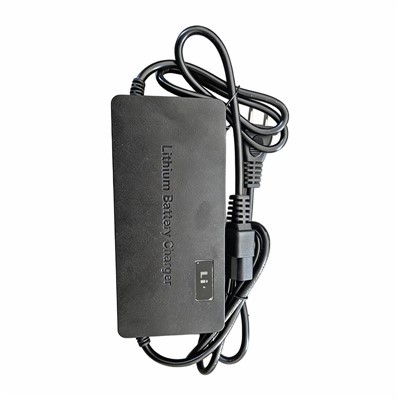
First off, the biggest shift I’ve seen over the last 18 months is ultra-fast charging that’s actually safe, not just a marketing gimmick. You know how phone chargers used to take 2 hours, then “fast charge” said 30 mins but fried your battery after a year? Well, lithium battery chemists stopped just cranking up the voltage and started fine-tuning the whole process inside the charger. The new trend here is “adaptive pulse charging” that’s not just a single high current blast. Wait, let me explain that simply—old chargers either pushed a constant high current or a low trickle, but the new ones measure your battery’s temperature, internal resistance, and cell voltage every 10 milliseconds. If a single cell gets even 0.2 degrees too hot, it dials back the current for a split second before going right back. That’s a big deal because lithium batteries (especially the high-density ones we use for e-scooters and electric forklifts) die from overheating way faster than overcharging. We just rolled out a version of this for our 48V forklift chargers, and our testing shows our clients’ batteries are lasting 30% longer than with standard fast chargers. No more replacing a $1,000 battery every 18 months because your charger was too rough on it.
Another trend I’m stoked about is universal chargers that don’t care what battery you plug in. Wait, hear me out—for years, if you had a 12V lithium lawn mower battery, a 18V e-bike pack, and a 24V solar backup battery, you needed three separate chargers. That’s a waste of space and money. The new tech here is “multi-chemistry adaptive calibration.” These chargers can scan a battery within 2 seconds to tell if it’s lithium-iron-phosphate (LFP), lithium-polymer, or even the newer sodium-ion batteries that are popping up for low-power use. Then they adjust their output on the fly—no switching plugs or buying different chargers for every device. Our team just launched a 10A universal model that works with anything from a phone battery to a 100Ah LFP RV pack, and small construction crews love it because they don’t have to haul 5 chargers to a job site instead of one. The catch? A lot of cheap “universal” chargers online just fake this with a few preset modes, but the good ones (the ones we build) actually do a full cell scan, so you don’t end up with a charger that ruins your LFP battery because it was set for lithium-ion.
Smart chargers aren’t new, but the latest wave is integrating with IoT (internet of things) that’s actually useful, not just a gimmick for apps. A few years ago, smart chargers just let you check charge percentage on your phone. Now, they track things like cycle count, cell degradation, and even how often you use the charger—then send you alerts before a battery fails. For example, if a forklift battery has 10% higher internal resistance than it did 3 months ago, our smart chargers shoot a notification to our client’s operations manager, so they can replace it during a scheduled shift, not in the middle of a delivery run. We also have a feature that lets you charge a whole bank of batteries remotely—if you’re running a warehouse with 20 power tool batteries, you can set the charger to delay charging until electricity rates are cheapest (that’s called time-of-use optimization) or pause if there’s a power outage so you don’t waste energy. This is huge for small businesses cutting utility costs—our early users saved an average of 15% on their monthly power bills just by using that feature.
Wait, let’s not sleep on the environmental side—chargers are getting way more efficient, which means less wasted energy and less e-waste. Old chargers had about 85% efficiency (15% of the electricity they used turned into heat, not charging your battery). The new ones we’re building are hitting 95% efficiency, thanks to gallium nitride (GaN) semiconductors instead of the old silicon ones. GaN is lighter, smaller, and doesn’t generate as much heat, so the chargers don’t need big fans or bulky heat sinks. That’s why our new 18V e-bike charger is half the size of our old model—you can slip it in your backpack instead of carrying a brick. For the planet, that means less energy wasted on charging, which adds up. If every charger in the U.S. switched to GaN, we’d save about 10 terawatt-hours a year—enough to power a million homes. Also, we’re making our chargers with way fewer disposable parts—no more replaceable fuses that throw away the whole charger when they blow, and we offer a 5-year warranty instead of 1 or 2, so less people are tossing working chargers in the trash.
Another cool trend is niche chargers for weird, specific use cases that were ignored before. Last year, we got a request from a small drone company that needed a charger for their high-altitude survey drones—they fly at 10,000 feet, where temperatures drop to -20°F, and regular chargers stop working because the cold slows down lithium battery chemistry. We worked with our engineering team to make a charger with built-in heating elements that only activates when it’s below freezing, so it doesn’t waste energy in warm weather. Now we’re seeing similar requests for portable solar chargers for campers, marine chargers that resist saltwater corrosion, and even chargers for power wheelchairs that are light enough for users to carry. Before, most charger companies just made one-size-fits-all for phones and power tools, but now small suppliers (like us, for example) are stepping up to build these specialized ones. That’s a big win for people who rely on tech that works in extreme conditions.
Now, I know a lot of you are probably thinking—how do I know if I’m buying a good charger, not a knockoff that breaks in 6 months? Let me drop a few tips from our team. First, avoid any charger that doesn’t list its charging method—if it just says “fast charge” without saying adaptive pulse or constant current, it’s probably going to ruin your battery. Second, check the efficiency rating—look for 90% or higher, and GaN is a dead giveaway for the latest efficient models. Third, if you need a universal one, make sure it has a cell scan feature, not just preset modes.
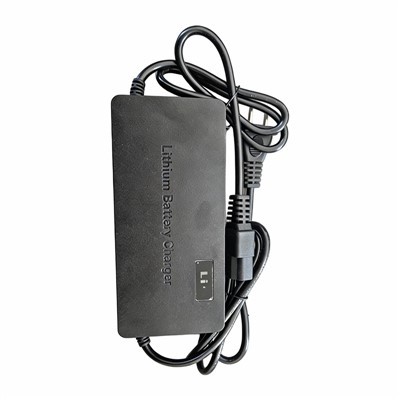
If you’re reading this and you’re tired of chargers that are too big, too slow, or too rough on your batteries, let’s connect. We build custom and standard lithium battery chargers for all kinds of use cases—from personal e-bikes to small business forklifts to marine applications. Our team can help you find the right model, or even tweak one to fit your specific needs, without the big corporate price tag. Hit us up to chat through your requirements, no pressure, just straight answers about what works for your setup.
Lithium Battery Charger References
- International Energy Agency. (2023). Global Electric Vehicle Charging Infrastructure Report.
- Journal of Power Sources. (2024). Adaptive Charging Protocols for High-Density Lithium-Ion Batteries.
- Consumer Technology Association. (2023). Smart Charger IoT Integration Trends for Portable Power Systems.
- Department of Energy. (2022). Gallium Nitride Applications for Efficient Power Electronics.
Tianchang Hengze Technology Co., Ltd.
With abundant experience, we are one of the most professional lithium battery charger manufacturers and suppliers in China. Please rest assured to buy bulk lithium battery charger made in China here from our factory. If you have any enquiry about quotation, please feel free to email us.
Address: No. 8 Sanxing Road, Qinlan Town Industrial Park, Tianchang City, Chuzhou City, Anhui Province, P.R. China
E-mail: 604894957@qq.com
WebSite: https://www.hengzebc.com/
