As a DTY nylon yarn supplier, I’ve spent the last seven years shipping this specialized material across 12 countries, from small batch orders for local textile workshops to full container loads for large apparel manufacturers. A question that comes up in almost every new client conversation—whether they’re a first-time importer or a seasoned factory manager—is this: What are the actual shipping regulations for DTY nylon yarn? It’s not a trivial detail. Miss a regulation, and you risk cargo delays, hefty fines, or even a shipment being seized entirely. This post isn’t just a list of rules; it’s the on-the-ground knowledge I’ve gathered working with global carriers, customs agents, and industry regulators for hundreds of DTY nylon shipments. Let’s break down what you need to know. DTY Nylon Yarn
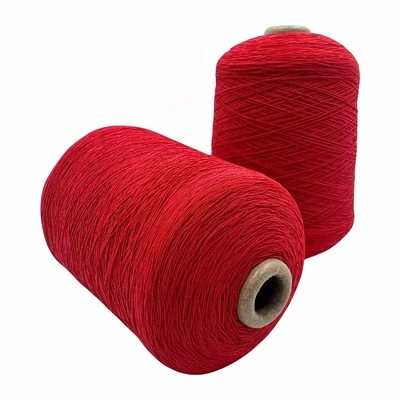
First, let’s ground this: DTY nylon yarn (drawn texturized nylon) is the stretchy, crimped material used for everything from athletic wear to upholstery. Unlike raw nylon pellets, it’s a processed, textile-grade product, which means it’s classified differently in global trade than its unprocessed counterpart. That classification is the foundation of almost every shipping regulation, so getting that right is non-negotiable. For most international shipping, DTY nylon falls under Harmonized System (HS) Code 5509.53, which is specifically for “texturized yarn of nylon or other polyamides, not put up for retail sale.” I’ve seen clients get stuck because they misclassify it as 5509.11 (which covers basic nylon yarn) and end up with incorrect duty calculations. Customs agents in the EU, US, and Southeast Asia all flag this misclassification regularly, so confirm your HS code with a trusted trade consultant before you ship.
Next, packaging regulations, because DTY nylon is delicate—its crimped structure is what gives it quality, and improper packaging can ruin an entire shipment. The International Air Transport Association (IATA) and International Maritime Organization (IMO) have specific guidelines for packaging textile products that our team has followed for years. First, each cone of DTY yarn (the standard unit we ship) must be wrapped in a food-grade polyethene film to resist moisture—nylon absorbs water quickly, which causes mildew and weakens the fiber, making it unusable for apparel. For ocean shipments, each pallet of cones must be wrapped in a waterproof stretch film, with a layer of corrugated cardboard between layers of cones to prevent the bottom cones from crushing under the weight of upper pallets. We also add desiccant packets (100-gram silica gel bags per pallet) in humid regions like Singapore or Brazil, because even the sturdiest wrap can’t stop 80% humidity from seeping in. For air freight, IATA requires that packaging meet “minimum shock resistance” standards, so we add a ½-inch foam liner around the pallet edges to prevent damage during loading and unloading. One of our clients in Mexico learned this the hard way: they skipped the foam liner for their first air shipment, and 15% of the cones arrived with frayed edges because of rough handling at the airport. That’s a avoidable cost—always check carrier-specific packaging rules, not just general guidelines.
Then there’s customs documentation, which is where most shipping delays happen. For DTY nylon, the required paperwork varies slightly by country, but there are core documents every shipper needs. First, the commercial invoice: it must list the exact quantity of DTY nylon (number of cones, total weight, value) and confirm the HS code 5509.53. We always include a “proof of origin” document, because many countries have trade agreements (like USMCA, ASEAN Free Trade Area, or EU GSP) that reduce or eliminate duty for goods from certain regions. For example, a client in Vietnam importing DTY nylon from our Thailand warehouse can claim 0% duty under ASEAN’s Common Effective Preferential Tariff (CEPT) if they provide the correct Form D. Missing that Form D would mean they pay 5-7% more in duties, which isn’t something we want our clients to absorb. Another key document: the material safety data sheet (MSDS). While DTY nylon isn’t classified as a hazardous material by IMO or IATA, some customs agencies in Europe (like Germany and France) require an MSDS to confirm it doesn’t contain restricted chemicals. We keep our MSDS updated annually, and we provide a digital copy to clients 7 days before shipment so they can submit it to their local customs office in advance.
Wait—speaking of hazardous materials: is DTY nylon ever considered hazmat? That’s a question we get a lot, especially from clients new to international shipping. For most standard DTY nylon, no— it’s non-flammable, non-toxic, and not reactive, so it’s classified as a “general cargo” by all major carriers. But there’s a caveat: some specialty DTY yarns (like flame-retardant DTY nylon used for upholstery) may be classified as hazmat by certain countries. For example, the US Department of Transportation (DOT) requires flame-retardant textiles to meet specific toxicity standards and include a hazmat label if they’re being shipped within the US. We’ve had clients ask us to label flame-retardant cones as hazmat, but we always advise them to check their carrier’s rules first—some carriers won’t accept hazmat textiles without additional insurance, which adds 10-15% to shipping costs. For standard DTY nylon, you can list it as general cargo, but never assume that’s the case for specialty variants.
Then there’s country-specific regulations that you can’t overlook, because rules change drastically depending on where you’re shipping. Let’s break down the top markets we work in, since they make up 70% of our DTY nylon shipments: the US, EU, and Southeast Asia.
For the US: The Consumer Product Safety Commission (CPSC) has guidelines for textiles that come into contact with skin, which most DTY nylon does. The main rule is that the yarn can’t contain lead or phthalates above 90ppm (parts per million) and 0.1% respectively. We test every batch of DTY nylon twice a year to confirm it meets CPSC standards, and we provide a test report to US clients before shipment. Also, starting in 2023, the US requires all textile imports to be labeled with the country of origin—so each pallet must have a clear, permanent label that says “Made in [Country]” and lists the HS code. One of our clients in California had a shipment held up for 10 days because their label was smudged, so they had to reprint and reapply labels at the port. That’s a small detail that causes big delays.
For the EU: The REACH (Registration, Evaluation, Authorization, and Restriction of Chemicals) regulation is the big one here. REACH restricts over 1000 chemicals in textiles, and DTY nylon has to be free of any REACH-restricted substances above 0.1% weight. We ensure our DTY nylon meets REACH standards, and we provide a “declaration of conformity” for each EU shipment. Also, the EU’s customs rules require that all import declarations include the “combustibility rating” of the yarn—DTY nylon has a natural combustibility rating of Class 2 (moderately combustible), so we include that on the commercial invoice. For clients shipping to the UK post-Brexit, there’s an additional requirement: the UKCA (UK Conformity Assessed) mark for textiles. While standard DTY nylon doesn’t need pre-assessment, you have to submit a UKCA declaration to UK customs to clear the goods. I’ve seen clients ship to the UK with only an EU CE mark and get their shipment delayed for 2 weeks, so that’s a critical difference.
For Southeast Asia: Our largest market is Indonesia, Vietnam, and Malaysia, where DTY nylon is used a lot in sportswear and fishing nets. The main regulation here is the ASEAN Free Trade Area (AFTA) rules of origin, which require that at least 40% of the product’s value comes from within the ASEAN region to qualify for preferential duty. If you’re importing DTY nylon from outside ASEAN (like China or Thailand) to Vietnam, you need to prove that 40% of the value comes from your local manufacturing process to get 0% duty. Many local manufacturers in Southeast Asia miss this, so they end up paying the most-favored-nation (MFN) duty rate, which is 5-10% higher. We help our clients calculate the value breakdown for every shipment so they can meet the rules of origin.
Then there’s transportation-specific rules, depending on whether you’re shipping by ocean, air, or land. For ocean freight: if you’re using a 20-foot or 40-foot container, the maximum weight for DTY nylon is 22,000 kg for a 20-foot container, because most carriers have a 22,000 kg limit for textile cargo (heavier loads can damage the container’s floor). We always confirm the container weight with clients before loading, because overloading can result in a fine of $100-$500 from the port. For air freight: IATA rules say that textile cargo can’t be shipped as “bulk cargo” unless it’s in sealed, labeled units, which cones are, so that’s fine, but air freight has a strict limit on moisture—we never ship DTY nylon via air during monsoon season in South Asia, because humidity can cause condensation in the aircraft’s hold, ruining the yarn. For land shipping (like between Thailand and Malaysia, or Mexico and the US): land carriers require that each pallet has a load securement label, because DTY nylon pallets can shift during long drives. We use a 4-inch metal strap around each pallet, secured to the forklift slots, to meet these rules.
Insurance is another part of shipping regulations that people often overlook. While DTY nylon isn’t hazardous, some carriers exclude coverage for “damaged textile cargo” if the packaging doesn’t meet their guidelines. For example, if you don’t add desiccant packets and the shipment gets moisture damage, the carrier won’t cover the loss. We always advise clients to get cargo insurance that specifically covers textile products, and we include a copy of our packaging compliance document with every shipment to prove we followed carrier rules. Last year, a client in Colombia had a pallet of DTY nylon damaged by a port flood—their standard general cargo insurance didn’t cover it, but their textile-specific insurance did, so they got 100% reimbursement. That’s a small extra cost (about 0.5% of the shipment value) that saves a lot of headache.
Now, common mistakes we see new clients make, which lead to regulatory issues. First, misclassifying the HS code: I mentioned earlier that some clients use 5509.11 instead of 5509.53, which leads to incorrect duty calculations. Second, missing the proof of origin document: this is the biggest cause of delays in ASEAN and USMCA shipments. Third, ignoring humidity in packaging: we’ve had 3 shipments ruined because clients skipped desiccant during a Brazil monsoon, costing them thousands in lost product. Fourth, not checking country-specific regulations before shipping: a few years ago, a client in Germany tried to ship standard DTY nylon with a flame-retardant label, which confused customs and delayed the shipment for 2 weeks. The label was unnecessary, and that mistake cost them $2,000 in lost production time.
At the end of the day, the shipping regulations for DTY nylon boil down to one core principle: preparation. Every regulation is designed to protect your cargo, avoid unfair trade practices, and keep supply chains running smoothly. As a supplier, we don’t just sell DTY nylon—we help our clients navigate these regulations to get their goods on time, on budget, and without hassle. If you’re a buyer looking for reliable DTY nylon, whether it’s a small trial order or a full container load, we can walk you through every step of the shipping process, confirm all documentation, and ensure your shipment complies with every local, national, and international regulation. Reach out to our team to discuss your next shipment, and we’ll provide a custom guide tailored to your destination and order size.
Polyester Double Covered Yarn References
- U.S. International Trade Commission. (2024). Harmonized Tariff Schedule of the United States: Chapter 55 – Man-Made Staple Fibers.
- European Commission. (2023). REACH Regulation: Restricted Substances List for Textiles.
- International Air Transport Association. (2022). Cargo Packaging Guidelines for Textile Products.
- ASEAN Secretariat. (2024). ASEAN Free Trade Area Rules of Origin for Textile Goods.
- International Maritime Organization. (2023). General Cargo Packaging and Handling Standards.
Zhuji Yuanhui Import & Export Co., Ltd.
Zhuji Yuanhui Import & Export Co., Ltd. is one of the most professional dty nylon yarn manufacturers and suppliers in China. With abundant experience, we warmly welcome you to buy high-end dty nylon yarn made in China here from our factory. If you have any enquiry about quotation and free sample, please feel free to email us.
Address: No.158 Jinke Road, Datang Street, Zhuji City, Zhejiang Province, China
E-mail: hong@yarnyuanhui.com
WebSite: https://www.yarnfty.com/
