Hey folks, if you’re running a warehouse, distribution center, or even a small retail operation moving pallets around, you know a pallet handling vehicle (let’s just call it a PHV from here on out—way easier to type) is non-negotiable. But here’s the thing: I talk to so many operations managers who either brush off PHV rules as “red tape” or have no clue what’s actually required to stay safe and compliant. I’m the owner of a small PHV supply business, so I see both sides every day: I sell the vehicles, and I get calls from teams who messed up a compliance check, got a fine, or even had a near-miss because they skipped a rule. Today, I’m breaking down exactly what regulations you need to follow—no stuffy jargon, just real stuff that keeps your team safe and your operation running smooth. Pallet Handling Vehicle
First off, let’s get one thing straight: PHV regulations aren’t just random rules made up by some guy in an office. They’re built from decades of workplace injury data. OSHA (that’s the U.S. Occupational Safety and Health Administration, for anyone who doesn’t know) alone reports that around 34,000 serious pallet-related injuries happen annually, most from bad PHV use or lack of training. So yeah, these rules matter. Let’s start with the basics: the two main types of PHVs you’ll encounter are manual pallet jacks (the ones you pump with your foot, no battery) and electric pallet trucks (battery-powered, easier to move heavier loads, common in big warehouses). Each has slightly different rules, but most core regs apply to both.
First rule: Every single operator has to be trained and certified. Wait, not just “show them how to use it once”—I see so many operations wing this. OSHA requires formal training that covers how to operate the PHV, load capacity limits, how to check for defects, and what to do in an emergency. And here’s a key point: training can’t be a YouTube video watched once. It has to be a hands-on session with a qualified trainer (not just the guy who sold you the PHV, though I’m happy to help connect you if you need one). Plus, certification isn’t a one-and-done thing. You have to re-train every three years, or right away if someone has a near-miss, gets injured, or you switch to a different type of PHV. Last month, a customer of mine tried to skip re-training for their night shift crew—they got hit with a $13,000 OSHA fine after an operator rammed a pallet into a shelving unit and crushed their hand. Dumb move, right?
Next up: Load capacity checks. This is the rule I see broken more than any other. Every PHV has a max load weight sticker right on the frame—don’t ignore it. I can’t tell you how many times a customer has called me panicking because their electric pallet truck’s battery died mid-move, and they found out they were pulling 200 lbs over the max capacity. Why does this matter? Overloading a PHV can cause the forks to bend, the wheels to lock up, or even the whole unit to tip. Manual jacks, especially, are designed for a specific weight—try to cram a 5,000 lb load onto a manual jack rated for 3,000 lbs, and you’re asking for a back injury or a dropped load. Pro tip: when you’re picking a PHV for your operation, tell your trainer or supplier exactly what your average pallet weight is. I had a customer last year who bought a cheap manual jack for 4,000 lb pallets—total mistake. The jack broke after two weeks, and he ended up paying twice as much to replace it plus covering a worker’s medical bills. Listen to the capacity limit, it’s not a suggestion.
Then there’s pre-use inspections. Before every shift, every operator has to do a quick check of their PHV. What should they look for? Let’s make it simple: forks (no bends, cracks, or rust), wheels (no flat spots or stuck debris like cardboard), hydraulic system (manual jacks: does it pump smoothly, no leaks? Electric: does the battery hold a charge, no frayed cables), and brakes (do they stop the unit fast if you hit something?). If something’s wrong, they can’t use it. A lot of teams will say “it’s fine, it worked yesterday”—no. Last quarter, one of my clients had an electric truck with a bad brake that they didn’t check. It rolled into a stack of empty pallets, knocked one over, and the pallet landed on a temp worker’s foot. They had to give the worker time off, fix the truck, and missed a shipment delay because of it. A 2-minute check could have prevented all that.
Now, if we’re talking about electric pallet trucks (the more common powered ones), there are extra rules. First, battery maintenance. If you use a lead-acid battery (most standard ones), you have to charge it in a well-ventilated area—no locking it in a small closet, because the gasses from charging are flammable. Also, never leave a battery plugged in longer than 24 hours; overcharging shortens the life of the battery and can cause it to leak. For lithium-ion batteries, which are more common in newer PHVs, you still have to check for damage to the casing or cables every time you use it. I always tell customers: if your battery has a dent or a frayed wire, send it to a certified service tech, don’t try to fix it yourself. Lithium-ion fires are no joke—they burn hot and fast, and warehouses are full of other flammable stuff.
Another big one: operation rules for the work space. PHVs don’t belong on ramps, uneven surfaces, or carpeted areas unless they’re specifically designed for it. Manual jacks, in particular, slip on carpet or uneven concrete—you’ll lose control. Also, no riding the PHV. I see this all the time in small businesses: a worker hops on the back of an electric pallet truck to get from one end of the warehouse to another instead of walking. OSHA bans this 100% because if you hit a bump or slip, you can fall off and get run over by the PHV. Last year, a small grocery store I supply had a part-time worker hop on a PHV to go get a soda from the break room—he ran over his own foot, missed a week of work, and the store had to update all their PHV rules. Also, no carrying more load than you can see over. If your load is so tall it blocks your view, that’s a hazard. You have to use a different method, like a taller lift, or split the load into two smaller ones.
Wait, what about outdoor use? If you’re moving pallets outside, like from a loading dock to a trailer, there are even more rules. PHVs need to be rated for outdoor use—standard electric pallet trucks aren’t built to handle rain, mud, or rough pavement. Also, loading docks have their own OSHA rules: the gap between the dock and the trailer has to be less than 6 inches, and you have to use dock plates or bridge plates if it’s bigger. I had a customer who tried to use an indoor-only PHV outside in the rain—water got into the electrical system, shorted it out, and he had to pay $800 to repair it on top of the damage from getting stuck in the mud. Don’t cut corners on outdoor-rated equipment, it’s not worth it.
Now, what about compliance checks? OSHA does random inspections, but a lot of states have their own rules too, especially for larger operations. But even if you’re in a state with loose rules, don’t skip this stuff. Most of my repeat customers tell me that staying compliant not only keeps them safe but also saves money in the long run. Fines for PHV violations can be anywhere from $1,000 for a minor training issue to $15,000 for a serious injury. Plus, a worker’s comp claim can skyrocket if there’s an accident—way more than the cost of proper training or a good PHV.
Let me throw in a real example from my own business to make this concrete. A local warehouse called me last month, panicking because they got a notice from OSHA saying they had 12 PHV operators who weren’t certified. They tried to train them all on their own with a 1-hour video, which OSHA marked as “inadequate.” I helped them bring in a certified trainer for a hands-on session, re-certified their operators, and recommended a few new electric PHVs for their high-load areas. They ended up avoiding a $12,000 fine, and their injury rate dropped that quarter—win-win.
Now, what should you do right now if you’re reading this? First, take 10 minutes and look at your current PHV rules. Do you have formal training? Are pre-use inspections required and tracked? Do your operators know the load capacity? If any of those are no, you’re at risk. I’m here to help—whether you need to upgrade your PHVs to ones that match your operation’s needs, connect you with a qualified trainer, or just answer a question about a specific rule. I’ve been in this business for 7 years, and I’ve worked with everything from tiny retail stores with 2 PHVs to big distribution centers with 50. I’m not just a supplier—I’m someone who’s seen the mistakes, the wins, and the stuff that keeps people safe.
Wait, one more thing I almost forgot: if you’re buying a used PHV, make sure it’s compliant with current rules. A lot of old PHVs don’t have modern safety features like emergency brakes or load limit alarms. When I sell a used PHV, I always do a full inspection first to make sure it meets OSHA standards. Buying a used one without checking? You could end up with a unit that’s not only unsafe but also gets you a fine if it fails an inspection.
Let me wrap this up so it’s not too long—what’s the core of all these regulations? It’s common sense, paired with formalized steps to keep everyone accountable. PHVs are super useful tools, but they’re not toys. The rules exist to make sure your workers go home at the end of the day, and your business keeps running without costly delays or fines.

If you’re in the market for new PHVs, need to refresh your team’s training, or even just have a question about a specific rule for your operation, reach out. I’m happy to chat, no pressure, no sales pitch unless you want one. I’ve helped hundreds of operations get compliant, and I can help you too. Don’t wait until there’s a near-miss or a fine—act now to get your PHV setup right.
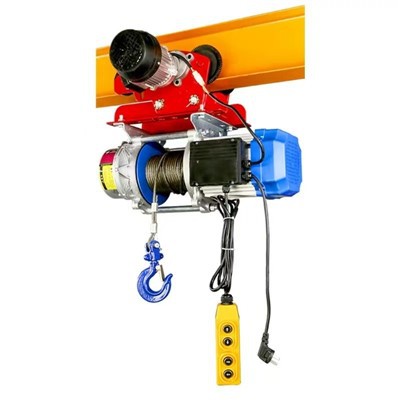
Multi-functional Electric Hoist References
OSHA 29 CFR 1910.178: Powered Industrial Trucks
National Institute for Occupational Safety and Health (NIOSH): Pallet Jack Injury Prevention Guidelines
Material Handling Industry (MHI): Pallet Handling Vehicle Safety Standards
Hebei Hengtai Crane Machinery Manufacturing Co., Ltd.
As one of the leading pallet handling vehicle manufacturers in China, we warmly welcome you to buy bulk discount pallet handling vehicle in stock here from our factory. All customized products are with high quality and low price. For more cheap products, contact us now.
Address: Weigezhuang Village, Donglu Township, Qingyuan District, Baoding City, Hebei Province
E-mail: hbht@cnhengtai.com
WebSite: https://www.cnhengtai.com/
