Hey everyone, I’m Jake, and I’ve been running this plastic hand strap supply gig for about 8 years now. In that time, I’ve lost count of how many times customers have hit me up with the same question: “Are these plastic hand straps even gonna hold up around chemicals?” Let’s cut to the chase—this isn’t a yes/no answer, and I’ve had way too many clients panic when their straps start looking weird after a few uses in a warehouse or shop. So today, I’m breaking this down straight, no stuffy lab jargon, and giving you the real tea on what makes these straps work (or not) with chemicals. Plastic Hand Strap
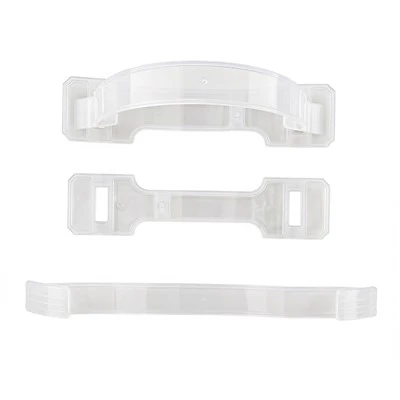
First off, let’s get one thing clear: not all plastic hand straps are created equal. I see people online throwing around “plastic” like it’s one material, but trust me, it’s way more complicated than that. When we’re talking hand straps, most quality ones (the kind we supply) are made from polypropylene or TPU—two workhorses for industrial and everyday use. But the cheap stuff you find at dollar stores? That’s usually low-density polyethylene (LDPE) or even a recycled mix that’s full of impurities. Those are the ones that’ll turn to mush or crack if you so much as get a drop of cleaner on ’em.
Let’s start with the big question: chemical resistance. Here’s the honest truth—plastic hand straps, in general, are way more chemical-resistant than, say, fabric straps or leather. But that doesn’t mean they’re unbreakable around every chemical under the sun. Let’s get specific because vague answers suck.
Polypropylene (PP), which is what most of our heavy-duty hand straps are made of, is a rockstar for resisting most chemicals. Think about common stuff you’d find in a garage, warehouse, or even a janitor’s closet: mild to moderate acids (like vinegar, window cleaner, or dilute bleach), alkalis (dish soap, laundry detergent, basic floor cleaners), oils, greases, and even most solvents that you’d use for general cleaning. I’ve had customers use our PP straps for things like carrying chemical buckets, moving parts in auto shops, and even transporting cleaning supplies, and they’ve lasted way longer than any fabric or leather option they tried before. That said, PP isn’t invincible. It’s gonna have a bad time if you throw it in contact with concentrated sulfuric acid, strong oxidizing agents (like pure hydrogen peroxide or some industrial bleaches), or really aggressive solvents like dichloromethane. I once had a customer send back a batch of straps after they used them to haul a drum of industrial adhesive remover—turns out that stuff eats right through PP, and we had to replace them, which stung, but it’s part of the job. We learned to label those as “not for use with harsh solvents” after that.
Then there’s TPU (thermoplastic polyurethane), which we use for a lot of our flexible, heavy-lift hand straps. TPU’s super different from PP because it’s stretchy and has way better abrasion resistance, but its chemical profile is a bit trickier. TPU is great for resisting oils, greases, and most mild chemicals, just like PP, but it’s more sensitive to things like strong acids and some aromatic solvents (like toluene, which you’d find in paint thinners or some adhesives). The upside? TPU holds up way better than PP in extreme cold, which is why we use it for straps for outdoor work in freezing temperatures, even if it’s not the best for some chemicals. I always tell customers: pick PP for chemical-heavy indoor or warehouse use, TPU for when you need flexibility and cold resistance, and never mix them up.
Now, let’s talk about what “chemical resistance” actually means, because that’s another thing people get wrong. A lot of manufacturers will slap “chemical-resistant” on every strap, but that just means it resists a specific list of chemicals for a limited time. It’s not like the strap is gonna survive being soaked in hydrochloric acid for a week. When we test our straps, we do what’s called “immersion testing” where we submerge them in common chemicals for 24, 48, and 72 hours, then check for swelling, cracking, or loss of tension. For example, our PP straps hold up really well in dilute bleach for 72 hours, but after a week, you’ll start to see slight discoloration and maybe a tiny bit of swelling. That’s normal—they’re not indestructible, just resistant enough for everyday use.
I also get asked a lot about “everyday vs. industrial chemicals.” Like, what if you’re just carrying a bottle of all-purpose cleaner, or using a strap to hold your gardening tools near fertilizer? That’s totally fine. Fertilizer is mostly nitrogen and potassium, which are mild alkalis, and our PP straps handle that no problem. Even things like sunscreen, hand sanitizer (which is mostly alcohol), or dish soap? They don’t phase our straps at all. I keep a set of our test straps in my garage where I keep my gardening supplies and cleaning stuff, and they’ve been there for 2 years now, no issues at all. The problems only come when you’re dealing with concentrated, industrial-strength chemicals that most people don’t have lying around their homes.
Now, let’s get into the mistakes I see people making that ruin their plastic hand straps around chemicals. First, buying cheap generic straps online. I once had a customer come to me after he bought 50 straps from a random Amazon seller for $10. Within a week, half of them had cracked when he used them to carry paint cans. Those were made from low-quality LDPE, which breaks down really fast with solvents in paint. Our straps cost a bit more, but they’re made with industrial-grade PP or TPU that’s tested to handle way more. Second, not checking the label. I know, labels are boring, but ours have a little cheat sheet on the back that says what chemicals to avoid. Most customers don’t read it, and then they’re surprised when their straps get damaged. Third, overloading. Even the most chemical-resistant strap can break if you’re carrying way more than it’s rated for, and if it breaks, it might scrape against a chemical container and get contaminated itself. Simple rule: never exceed the weight rating on the strap, and you’ll get way more life out of it.
Another thing that’s rarely talked about: UV exposure. Wait, how does that relate to chemical resistance? Well, plastic breaks down when exposed to sunlight, and that makes it way more susceptible to chemicals. If you’re using plastic hand straps outdoors where they’re in the sun all day, even if they’re chemical-resistant, the UV rays will weaken the plastic over time, making it easier for chemicals to eat through it. That’s why we add UV stabilizers to all our outdoor-grade straps—they cost a tiny bit more, but they keep the plastic from breaking down in the sun and boost its chemical resistance. I can’t tell you how many customers forgot about the UV part and came back with straps that looked fine chemically but were brittle from sun damage. Adding UV stabilizers was a game-changer for us, and it’s something I wish more suppliers would do.
Let’s address a common myth, too: “All plastic hand straps will corrode or break down with chemicals eventually.” Yeah, that’s technically true, but so will any other material. Leather will rot with chemicals, fabric will fray and get stained, metal will rust. Plastic hand straps just hold up way better than those options for most uses. The key is matching the strap material to the chemicals you’re using. If you work with a lot of harsh solvents, we can make custom straps from materials like PVDF, which is super resistant to strong acids and solvents, even though it’s a bit more rigid and expensive. We don’t keep PVDF straps in stock because most people don’t need them, but we can make them for bulk orders for industrial clients.
I’ve also had some wild stories over the years that drive this home. There was the construction crew that used our PP straps to carry buckets of concrete cleaner every day for 6 months—they said the straps looked a little faded but were still going strong. Then there was the auto shop that used cheap straps to carry motor oil and brake fluid, and within a month they were cracking. Brake fluid has glycol ethers, which break down low-quality plastic, but our PP straps handled it fine for over 3 months until they upgraded to ours. That’s the kind of real-world testing you don’t get from a textbook.
So, to wrap this up: are plastic hand straps resistant to chemicals? The short answer is yes, most quality industrial-grade ones are resistant to the common chemicals you’ll run into in homes, garages, warehouses, and shops, but it depends on the material, the concentration of the chemical, and how long the strap is exposed. The cheap stuff from random places? Not so much. The key is picking the right material for your use case, not skimping, and taking care of them (avoiding extreme chemicals, UV exposure, and overloading).
Now, if you’re in the market for plastic hand straps and want to make sure they’re chemical-resistant for your specific needs—whether you’re a homeowner hauling cleaning supplies, a warehouse worker, or a big industrial operation—hit us up to chat. We can walk you through the different materials, send you sample straps to test, and make sure you get exactly what you need without wasting money on stuff that’ll fall apart. No pushy sales stuff, just straight answers like I’ve given you here.
Plastic Carton Handle References
- Harper, C. A. (Ed.). (2002). Handbook of Plastics, Elastomers, and Composites. McGraw-Hill.
- Brandrup, J., Immergut, E. H., & Grulke, E. A. (1999). Polymer Handbook (4th ed.). Wiley.
- National Institute of Occupational Safety and Health (NIOSH). (2018). Chemical Resistance Guide for Plastics Used in Workplace Environments.
- "Thermoplastic Polypropylene: Chemical Resistance Properties." Modern Plastics Encyclopedia, 2021.
- "TPU (Thermoplastic Polyurethane) Material Properties and Chemical Compatibility." Engineering Plastics Handbook, 2020.
Tengzhou Fujin Plastic Products Co., Ltd.
As one of the most professional plastic hand strap manufacturers and suppliers in China, we also support customized service. With abundant experience, we warmly welcome you to buy bulk plastic hand strap made in China here and get pricelist from our factory. For price consultation, contact us.
Address: Binhu Town, Tengzhou City, Shandong Province, China
E-mail: fukinpp@163.com
WebSite: https://www.tzfujin.com/
