If you’re like most installers, electricians, or facility managers I talk to on a weekly basis—whether I’m at a trade show in Dallas, hopping on a call with a client in Toronto, or troubleshooting a last-minute order for a commercial build in Chicago—you don’t get into the cable business to study environmental regulations. You get into it to get the job done on time, keep crews safe, and make sure the wiring works for years. For years, I thought environmental rules for installation cables were just fine print for big utility companies, something that didn’t apply to my business as a mid-sized installation cable supplier. That was until a client in Ohio reached out last spring, panicking because their entire cable order was held up at customs. The inspector noticed our jacketing material contained a chemical that wasn’t allowed under the state’s new 2023 rule for building wire, and we had to scramble to rework 12,000 feet of cable to meet the requirement. That moment changed everything for me, and it’s why I want to break down what environmental regulations for installation cables actually mean—for suppliers like me, and for anyone who relies on our product. Installation Cable
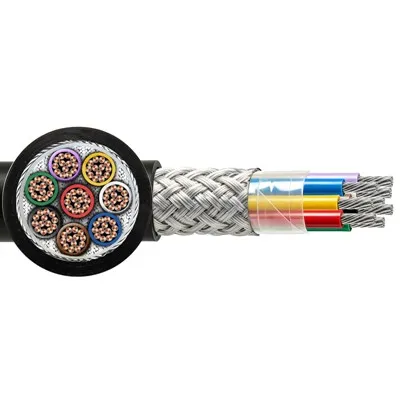
Let’s start with the basics: what even counts as an “installation cable”? When I say that, I’m not talking about heavy-duty power lines for the grid or fiber optic cable for backhaul. I’m talking about the stuff you run in walls, under floors, in ceilings, and around commercial and residential spaces—Romex, THHN/THWN, low-voltage control cable, coaxial cable for networking, even the smaller cables used in smart home devices. These cables don’t just carry power or data; their jackets, insulation, and even the components inside can leach chemicals into the air, soil, or water if they’re damaged during installation, or when they’re thrown away at the end of their 30- to 50-year life. That’s the core of what environmental regulations for these cables are designed to address.
Over the last decade, regulators around the world have been tightening rules on this because old cable materials were a hidden source of pollution. For example, decades ago, most cable jackets used polyvinyl chloride (PVC) that had lead as a stabilizer and phthalates to make it flexible. Lead is a neurotoxin that’s especially dangerous if it gets into indoor air or landfill runoff, and phthalates have been linked to hormone disruption in humans and wildlife. Back when I first started in this business 18 years ago, that’s what everyone used—it was cheap, easy to work with, and met the fire safety standards we relied on. But by the early 2010s, Europe’s REACH regulation (Registration, Evaluation, Authorization, and Restriction of Chemicals) started banning certain phthalates in all cables sold in the EU, and U.S. states began following suit.
Here in the U.S., regulation isn’t uniform across the federal level, which is one of the biggest challenges for a supplier like me that ships to 47 states. The Occupational Safety and Health Administration (OSHA) sets some workplace safety rules for cable installation, like limits on fumes released when welding cable, but the main environmental rules for installation cables fall to state and local governments, plus a few federal agencies. The EPA has the Resource Conservation and Recovery Act (RCRA), which governs how hazardous waste is handled—and some old cables with heavy metal components are classified as hazardous waste if they’re not recycled properly. But where the real action is now is in state building codes. California’s Title 24, for example, has strict limits on volatile organic compounds (VOCs) released from building materials, including cable jackets, because of indoor air quality concerns. Washington state’s recently adopted model building code bans certain flame retardants in low-voltage cables used in schools and hospitals, and New York’s 2022 Climate Leadership and Community Protection Act (CLCPA) requires all new commercial construction to use cables with 30% recycled content by 2030.
I know what you’re thinking: “This is a mess. How do I keep up with all this?” That’s why, after that Ohio customs fiasco, I sat down with our team of engineers and compliance managers to map out every regulation that applies to our products, from raw material sourcing to end-of-life disposal. Let’s break down the key categories of rules that matter for installation cables, because they’re not all the same.
First, there are fire safety and toxicity regulations. This is the oldest category, and it’s still the most non-negotiable. For years, fire codes like the National Electrical Code (NEC) in the U.S. and IEC standards internationally required cables to resist combustion, but they didn’t always address what happened when they burned or when they broke down over time. Now, many regulators combine fire safety with environmental health: for example, NFPA 70 (the NEC) has added requirements for “low-smoke, zero-halogen” (LSZH) cables in certain commercial buildings, because halogen gases released when PVC burns are toxic and can make it harder for people to escape a fire. LSZH jackets are made with polyethylene or polypropylene instead of PVC, and we’ve invested heavily in updating our production lines to offer LSZH options across most of our product lines over the last three years. That Ohio order I mentioned? We were using an older PVC jacket that didn’t meet Ohio’s updated fire toxicity limits, even though it was compliant with the NEC. That’s the kind of fine line you have to watch as a supplier.
Next, there are restrictions on harmful chemicals. This is where the regulation has gotten really granular, and it varies a lot by location. REACH in the EU has a list of “substances of very high concern” (SVHCs) that are banned or limited in all products, including cables, when their concentration exceeds 0.1% by weight. That means any raw material we use—from the plastic pellets for jacketing to the copper insulation to the adhesives we use to bond different components—has to be tested to make sure it doesn’t have any SVHCs over that limit. Here in the U.S., many states have adopted their own versions of REACH, like Maine’s Toxic Substances Control Act (TSCA) for children’s products and building materials, and Oregon’s Clean Energy Jobs Act, which bans the use of certain per- and polyfluoroalkyl substances (PFAS) in cables sold for outdoor use, because PFAS don’t break down in the environment and have been found in groundwater across the state. PFAS were a common waterproofing agent in cable jackets for years, and we’ve had to switch to alternative materials that work just as well without the PFAS, but it’s meant retesting every product and updating our supplier contracts to make sure every material component is PFAS-free.
Then there are rules around recycled content and end-of-life responsibility. This is a newer area, driven by circular economy goals. The EU’s Circular Economy Action Plan requires electrical and electronic equipment (EEE), including installation cables, to have a minimum of 20% recycled content by 2027, and Norway has already implemented that rule for all cables sold in the country. In the U.S., as I mentioned earlier, New York’s CLCPA sets a 30% recycled content requirement for commercial cables by 2030, and Colorado has a similar requirement for residential construction starting in 2025. What’s important here is that these rules aren’t just about using recycled copper—they’re about recycled plastic for jackets too. That’s been a bigger challenge for us, because recycled plastic has to be purified and tested to make sure it meets the same fire and toxicity standards as virgin plastic. We now work with two plastic recyclers in Ohio and Texas that specialize in recycling cable waste, so we can source recycled jacket material that’s both compliant and cost-competitive.
Another part of end-of-life regulation is extended producer responsibility (EPR). EPR rules mean that suppliers are responsible for taking back and recycling their products at the end of their life, instead of just letting them go to landfill. The EU’s WEEE (Waste Electrical and Electronic Equipment) Directive has had EPR for cables for years, and more U.S. states are adopting EPR for construction materials. For example, California’s EPR law for construction and demolition waste, which went into effect in 2022, requires cable suppliers to join a take-back program to recycle old cables from construction sites, rather than letting them be sent to landfills where they can leach chemicals. We joined the national cable take-back program run by the National Electrical Manufacturers Association (NEMA) two years ago, because we realized that not only is it a regulatory requirement in states like California, but it’s also something our clients appreciate—many of our big commercial customers in California require us to provide EPR documentation as part of every order now.
I know a lot of installers and contractors read this and think, “This is the supplier’s problem, not mine.” But that’s not entirely true. When we mess up, like that Ohio customs incident, the blame doesn’t just fall on the supplier. The inspector, the general contractor, even the project manager can face fines or project delays if the cables don’t meet local rules. Last year, I had a call with a large commercial builder in Houston who told me their $12 million office build was delayed two weeks because a batch of cables they had ordered used a fire retardant that wasn’t allowed under Texas’s new building code. The builder ended up having to pay for overnight shipping for a replacement order from another supplier, but the project’s opening got pushed back, costing them thousands in lost rental revenue. That’s why it’s not just a supplier concern—everyone along the supply chain needs to understand these regulations.
So what does this mean for suppliers like me, and for anyone working with installation cables? First, it means that “compliant” isn’t a one-size-fits-all label. A cable that meets REACH standards for Germany might not meet California’s TSCA standards, and a cable approved for residential use in Florida might not be allowed in a public school in Washington state. At my company, we’ve started labeling every product with a compliance matrix that lists exactly which rules it meets in each state and country, so our clients don’t have to do the guesswork. We also provide supporting documentation, like material safety data sheets (MSDS) and test reports, with every order, because inspectors and project managers always ask for that now.
Second, it means that we’re investing more in sustainable products, not because regulators are forcing us, but because our clients are asking for them. Over the last three years, our line of LSZH, PFAS-free, 30% recycled-content cables has grown from 10% of our total product line to 42%, and sales of that line are up 180% year-over-year. We recently launched a new line of solar panel cables that meet both REACH and the EPA’s Design for the Environment (DfE) standards, and we’ve already secured contracts with three large solar farm projects in the Southwest that require those specifications. That’s not just a regulatory win—it’s a business win, because more and more architects and builders are prioritizing sustainable, low-environmental-impact materials for their projects.
But I’ll be honest: it’s not all easy. Keeping up with new regulations is a full-time job. We have a team of three people whose only job is to track new rules across all 50 states and major international markets, test our materials, and update our products. Raw material costs for compliant products are 15-20% higher than non-compliant ones, which means we have to balance keeping our prices competitive with covering the cost of compliance. Last year, we had to raise our prices by 4% to cover new testing and raw material costs, and some smaller contractors grumbled about it at first. But after explaining that the alternative—using non-compliant cables—could lead to fines, project delays, and liability, most understood.
If you’re a contractor, installer, or project manager reading this, my best advice is to ask your cable supplier pointed questions about compliance. Don’t just ask “Are these cables compliant?” Ask “Which state or country rules do they meet?” “Do you have test reports available?” “What’s the recycled content?” “Do you offer end-of-life take-back?” A good supplier, like my company, won’t hesitate to share that information, because we know that transparency is the only way to build long-term trust.
At the end of the day, environmental regulations for installation cables aren’t just red tape. They’re a way to make sure the cables we use don’t harm the people who work with them, the people who live and work in buildings with them, or the environment they end up in when they’re worn out. That’s why I made the decision a few years ago to invest in updating our entire product line, even when it meant short-term costs, rather than selling old, non-compliant cable just to keep prices low. My goal as a supplier isn’t just to deliver on-time orders—it’s to deliver products that my clients can trust, and that meet both their project needs and their environmental responsibilities.
If you’re working on a project and need to make sure your installation cables meet all the applicable environmental regulations, or if you’re looking for a supplier that prioritizes compliance and transparency, we’d be happy to talk through your needs. We can help you navigate state and local rules, provide test reports and compliance documentation, and work with you to source the right cables for your project, no matter where it’s located. We’ve worked with small residential contractors, large commercial builders, utility companies, and solar installers, and we know that every project has unique requirements. Don’t risk delays or fines—reach out to us to discuss your cable needs today.
RF Coaxial Cable References
National Electrical Code (NEC) 2023 Edition. National Fire Protection Association.
REACH Regulation (EC) No 1907/2006. European Chemicals Agency.
U.S. Environmental Protection Agency. Resource Conservation and Recovery Act (RCRA).
California Building Standards Code (Title 24, Part 6) 2022 Edition. California Building Standards Commission.
Extended Producer Responsibility for Electronics and Construction Materials. National Electrical Manufacturers Association.
Yangzhou Huayu Cable Co., Ltd.
Address: No. 9 Jingang Road, Yangzhou City, Jiangsu Province, China
E-mail: huayucableco@126.com
WebSite: https://www.huayucabletech.com/
