Hey there, if you’ve ever walked a sheet metal fabrication shop floor, you’ve probably seen a turret punch press humming away—stamping out precision holes, notches, and even custom shapes in everything from thin aluminum for appliance brackets to thick steel for industrial enclosures. As a sheet metal fabrication machinery supplier, I get asked this question every single week: “What thickness can a turret punch press actually handle?” It’s not a one-size-fits-all answer, and skipping the details will cost you in scrap, downtime, or even broken tools. Let’s break this down like we’re chatting by the shop break room table, no stuffy jargon dumps. Sheet Metal Fabrication Machinery
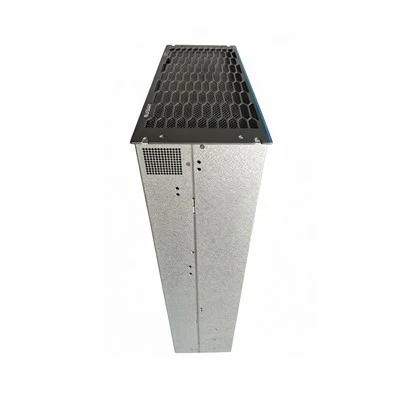
First off, let’s ground this in what a turret punch press does, for anyone who’s new to the game. It’s a machine with a rotating turret packed with different punch and die sets, right? You load a sheet of metal, program the shapes you need, and it slams punches through the metal in seconds, moving the sheet with an X-Y table. The key here is that it relies on force—tons of force, actually—to push that punch through the metal. So how much force you get, and how that force interacts with the metal, is the whole thickness story.
Let’s start with the basics: typical thickness ranges most turret punch presses handle, and where that range comes from. For the small, entry-level presses we sell for small shops or hobbyist job shops, that range is usually 0.5mm (that’s like the thickness of a credit card) up to about 3.2mm (roughly a standard laptop base). These are usually called “compact turrets” or “entry-level mechanical” presses, since they don’t have the brute power of bigger models. But wait—don’t let that 3.2mm number trick you. If your metal isn’t mild steel (the most common stuff, cheap and easy to punch), that changes immediately. For example, aluminum (which is softer than mild steel) can go a little thicker on these entry models—maybe up to 4mm max—while stainless steel, which is way harder, will top out around 2.5mm. That’s a huge difference most new fabricators miss; they see the spec sheet’s “max thickness” for mild steel and assume it works for every metal, and end up with bent punches or a sheet that doesn’t punch all the way through.
Now, if you’re a mid-sized shop doing commercial enclosures, HVAC parts, or automotive brackets, you’re probably looking at a mid-range hydraulic turret punch press. Hydraulic presses use fluid pressure instead of mechanical levers to generate force, so they hit way harder without as much wear on parts. These bad boys typically handle from 0.4mm all the way up to 6.4mm for mild steel. Still, metal type matters here too. Brass, which is soft and ductile, can push to 7mm easy. But if you’re working with high-strength steel (HSS) or hot-rolled steel, that max drops to 5mm, and stainless only goes to 5.5mm. I had a customer last year who bought a mid-range hydraulic press and tried punching 6mm stainless for a cabinet panel. He ended up snapping a $40 punch, bending the die, and having to replace a hydraulic seal because he pushed it too hard—all because he didn’t check the metal-specific specs. Oops.
Then there are the big dogs: high-tonnage heavy-duty turret punch presses, usually for industrial fabrication, heavy equipment parts, or thick brackets. These have tonnages way higher than standard models—we’re talking 30 tons up to 80 tons, compared to 20 tons for mid-range. These can handle mild steel up to 12.7mm, and even stainless or HSS up to 10mm. But here’s the catch: when you get into thicknesses over 6mm, you don’t just punch a hole like you do in thin sheet. You have to adjust so many other factors, like the punch diameter, die clearance, and even the feed rate. I’ve seen shops try to punch 10mm steel with a tiny 10mm punch—total disaster. The die clearance needs to be at least 10-15% of the metal thickness, so for 10mm steel, you need a die with a 11-12mm opening, not a tiny one. If your die is too small, the metal bunches up instead of shearing clean, leaving a burr that takes extra time to grind off, or worse, cracks the punch.
Wait, let’s talk about burrs, because that’s a huge pain point. When you punch thin metal—like 0.5mm aluminum—burrs are almost non-existent, as long as your die is set right. But as metal gets thicker, burrs get bigger, and if your press doesn’t have enough tonnage, the shearing action gets rough, leaving that ragged edge. We recommend for any metal over 4mm, you use a turret punch with a back gauge that’s adjustable, so you can slow down the punch speed and make the shearing smoother. That’s a common upgrade people overlook when they’re buying a press—they just look at max thickness and forget about the controls that make thick punching work.
Another thing: sheet size and rigidity matter too. If you’re punching a huge 4×8 foot sheet of 5mm mild steel, even if your press can handle 6.4mm thick, that big, floppy sheet might warp when you punch through it, because the table can’t support it evenly. We always tell customers that when you’re working with thick sheets, go for a press with a solid support table (no gaps between the slats) and a clamping system that holds the sheet tight across the whole surface. Clamping weak spots = warped parts, especially on thick metal.
Now, let’s clear up a myth I hear all the time: “A turret punch press can handle thicker metal than a laser cutter.” No, that’s not true for most cases. Lasers can go up to 25mm for mild steel, right? But turret punches have their own superpower—speed for thin to medium thickness, and way lower cost per part for high-volume runs of holes and notches. So if you’re doing 10,000 brackets with 20 holes each, a turret punch is way better than a laser, even if the laser can handle thicker metal. But if you only need a few parts of thick metal, a laser is probably the way to go.
Wait, let’s get back to real-world examples. Last month, a customer who makes custom farm equipment called me panicking. He had a 25-ton turret press that he’d had for 8 years, and he wanted to start punching 8mm high-strength steel for tractor mounts. He thought his press could do it, but when he tried, the punch bent halfway through. I walked him through the math: 25-ton presses max out at around 7mm mild steel, and HSS is harder, so that 8mm was way over. We upgraded him to a 40-ton heavy-duty turret press, adjusted his die clearance to 12% of 8mm, and now he’s cranking out those mounts with zero broken tools. That’s the stuff I deal with every day, so I know this isn’t just spec sheet numbers—it’s what works on the shop floor.
What about common mistakes new fabricators make? Oh, let’s list these out because they’re avoidable. First, not checking metal type: always cross-reference your material’s hardness (in Brinell or Rockwell numbers) with the press’s tonnage rating for that material. Harder = lower max thickness. Second, using the wrong punch/die size: for thick metal, bigger punches and dies are non-negotiable. Third, ignoring tonnage demand per feature: a round hole uses less force than a square notch or a sharp corner. If you’re punching a tiny sharp square in 5mm steel, that’s way more force than a big round hole, so your max thickness for that feature will be lower than the general spec. Fourth, not maintaining your press: worn seals on hydraulic presses or dull punches reduce force, so a press that was punching 6mm steel a year ago might only do 5mm now. We send out maintenance checklists to all our customers every quarter, because even a small tweak makes a big difference.
Now, if you’re shopping for a turret punch press, what should you actually look at, not just the “max thickness” line? Let’s break that down quick. First, tonnage rating—ask for the tonnage at the ram, not just the press model number. A 30-ton mid-range press might have only 25 tons at the ram, which is less than advertised. Second, adjustable clamping and support table, especially if you’ll work with sheets over 3mm thick. Third, punch and die sets that are designed for thick material—some entry-level presses come with cheap punches that bend easily on heavy metal. Fourth, if you’re doing high-volume thick punching, go for a press with automatic tool changing, so you don’t have to swap big heavy punches manually every 5 minutes.
At the end of the day, there’s no magic number for “what thickness a turret punch press can handle.” It’s a mix of your press’s power, the type of metal you’re working with, the features you’re punching, and how well you set up your tools. I’ve seen entry-level presses handle 4mm aluminum all day long, and heavy-duty presses struggle with 9mm stainless if the setup is off.
If you’re currently stuck trying to figure out if your existing turret press can handle a new job, or you’re in the market for a new one that fits your specific material needs, hit us up for a chat. We don’t do generic sales pitches—we’ll ask you about your typical metal, the parts you make, and your volume, then give you the real answer, not just a spec sheet line. No pressure, just shop guys helping other shop guys make parts without headaches.
If you need more tech breakdowns or maintenance tips, feel free to reach out anytime. We’re here for all your sheet metal fabrication machinery needs.
Sheet Metal Enclosure References:
- Turret Punch Press Operation and Maintenance Manual, Fabricating Machinery Association, 2022
- Sheet Metal Thickness Guidelines for Punching, Modern Metal Fabrication Magazine, Vol. 47, No. 3, 2021
- Tonnage Calculations for Sheet Metal Punching, Society of Manufacturing Engineers, 2020
Hefei Excellent Intelligent Technology Co., Ltd.
As one of the most professional sheet metal fabrication machinery manufacturers in China, we’re featured by quality products and good service. Please rest assured to wholesale bulk customized sheet metal fabrication machinery made in China here from our factory. Also, pricelist is available.
Address: No.3 Jingyi Road, Douzhen Industrial Park, Gangji Town, Changfeng County, Hefei City, Anhui Province
E-mail: 1637201948@qq.com
WebSite: https://www.cnakst.com/
