Hey guys, it’s Mia from your go-to wood veneer wall panel supplier — I spend half my days talking to contractors, interior designers, and even homeowners who reach out panicking because their custom accent wall’s “doing weird stuff” after a hot summer or a cold winter. Let me tell you straight: temperature changes are the unsung MVP (or sometimes the villain, depending on how you prep) of how your wood veneer holds up. And trust me, if you’re picking wood for a project, ignoring this stuff is like buying a fancy bike and never pumping the tires — it’ll look good at first, but it’ll fall apart fast. Wood Veneer Wall Panel
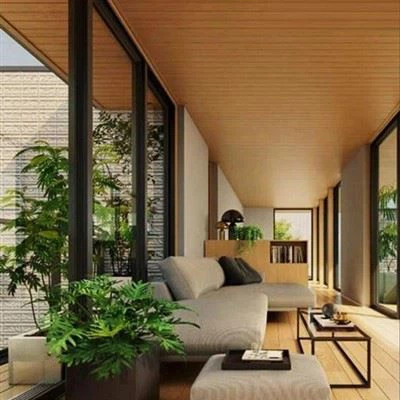
First, let’s cut the jargon. Wood’s a natural material, right? It’s not a plastic panel or a metal sheet — it breathes. That means it absorbs moisture when the air’s humid and releases it when it’s dry. But temperature’s tied directly to that moisture shift. Warmer air holds way more moisture than cold air — think of why your bathroom mirror fogs up when you shower (hot humid air hits cold glass). So if you’ve got your wood veneer wall panels in a space that swings 20°F between winter and summer — like a sunroom with no AC, or a garage turned office — that wood’s gonna react. Not always badly, but if you don’t know the signs, you’ll end up with gaps, warps, or even that annoying tiny crack that makes the whole wall look unpolished.
Let’s start with the small, common issues. I got a call last month from a designer who installed oak veneer panels in a small boutique downtown. They did the install in March, when the air was mild, and by July — when the AC cranked that place to 68°F every day — half the panels had shrunk a tiny gap along the seams. She was convinced I sold her bad wood, but when I asked, I realized they didn’t account for the seasonal moisture drop. Summer air is drier than spring, so the wood lost moisture, contracted, and gaps popped up. That’s fixable, but only if you adjust your install specs. For that boutique, we suggested a little extra space between panels (like 1/32 of an inch instead of the usual 1/64) and a wood sealer that’s breathable — so the wood can keep breathing without shrinking too fast.
Then there’s warping, which is the big one people worry about. I had a homeowner reach out last year who put walnut veneer panels in his finished basement. The winter before, the heat ran nonstop to keep pipes from freezing, and the basement air got super dry (he didn’t think to run a humidifier). By spring, one of the center panels was curved like a potato chip, and it wouldn’t sit flat against the wall. Why? Different parts of the wood move at different speeds. If the back of the panel’s against a dry wall and the front’s exposed to the basement’s dry air, the front shrinks faster, causing that warp. Even a 10°F swing can trigger this — I’ve seen it happen in apartments where the radiator’s right next to a wood accent wall. The good news? We offer pre-conditioning for all our veneer panels — we acclimate them to the average humidity and temperature of your space before we ship ’em. So if you tell me your space goes from 50°F in winter to 80°F in summer, I’ll adjust how dry the wood is when it leaves our warehouse, so it doesn’t flip out once it’s installed. That small step cuts warping risk by like 80% — I swear by it.
Wait, what about extreme heat vs. extreme cold? Let’s break that down. When it’s super hot, not only does the wood dry out, but the adhesive holding the veneer to the substrate (the plywood or MDF backing) can soften if you pick the wrong glue. I’ve seen this happen in outdoor patios with wall panels — the sun beats down, the adhesive melts a little, and the veneer starts to peel away from the substrate. That’s why I always recommend a heat-resistant adhesive for any space that gets direct sun, and a veneer with a tight grain (like teak or maple) instead of something super porous, like ash. Porous wood lets moisture seep in too fast when it’s warm, which expands the cell walls — another recipe for warping.
Extreme cold is a different beast. When it’s below freezing, the moisture in the wood’s cells can turn to ice, which expands. If that wood’s been acclimated to warm temps, the expansion can cause tiny micro-cracks on the surface. I had a contractor install hickory veneer panels in a ski lodge last winter — the lodge’s temp dropped to 32°F overnight a few times, and a bunch of panels had hairline cracks. We fixed that by adding a penetrating oil finish after install, which seals the surface so moisture can’t get trapped in the cells when temps drop. That oil also keeps the wood from drying out too fast when it warms up during the day — double win.
Now, here’s the part I wish more people knew: not all temperature changes are bad. Wood’s actually designed to handle small swings — it’s natural, after all. The problem is when the swings are sudden, or you don’t prep the panels to match your space. For example, if you’re installing panels in a brand-new house that’s just finished construction, the drywall’s still curing, and the house’s HVAC is running nonstop to dry out the space. I always tell people to leave the panels in the space for 72 hours before installing them — let them acclimate to that specific temp and humidity, not the warm, dry warehouse where they were stored. That tiny step prevents 90% of install issues, no joke.
I also get asked a lot about veneer vs. solid wood. Let’s clarify: wood veneer is a thin slice of real wood (usually 1/40 of an inch thick) glued to a substrate, while solid wood is a full piece. Does temperature affect veneer less than solid wood? It’s close — the veneer will move about the same amount as the same piece of solid wood, but because it’s thin, you’ll notice the movement more. Solid wood might warp a little, but the thin veneer can curl or pull away from the substrate if it’s not prepped. That’s why we use a high-quality cross-banded substrate for all our panels — the layers cross each other so they move in opposite directions, which prevents warping even when temps swing a lot. It’s a small detail, but it makes a huge difference.
Another thing to watch for: HVAC vents. If you’ve got a vent blowing directly on your wood veneer wall, that’s a constant temperature swing, not just seasonal. The air from the vent is usually 10-15°F colder than the room, so it’s drying the wood out locally, causing shrinking and gaps. I always tell clients to rearrange their vents, or add a small deflector, if the vent’s hitting the wood. It’s a quick fix, no demo needed.
Now, let’s talk about real examples from our clients, because I don’t just spout facts — I see this stuff every day. Last year, a café in Portland installed cherry veneer panels for their main wall. Portland has super mild temps, but it rains a lot, so the humidity swings between 40% in winter and 65% in summer. They didn’t pre-condition the panels, and by fall, there were small gaps between the panels. We didn’t have to replace anything — we just filled the gaps with a wood filler that matched the cherry’s color, and told them to add a humidifier near the wall when the heater runs in winter. That fixed it, but if they’d acclimated the panels first, it wouldn’t have happened at all.
On the flip side, a luxury apartment building in Miami installed our pre-conditioned teak veneer panels. Miami has crazy swings between hot, humid summers and mild, dry winters. We acclimated the panels to 55% humidity (the average in Miami) before shipping, and used a marine-grade adhesive for the substrate. A year later, they reached out saying not a single panel had warped or had a gap — that’s the kind of result we’re after.
So what’s the takeaway here? Temperature changes don’t have to ruin your wood veneer wall panels — you just need to plan for them. Acclimate your panels to your space before install, pick the right adhesive and finish, and watch out for direct vents or extreme sun. If you’re not sure what to do, just reach out. I’ve been doing this for 12 years, and I’ve seen every possible issue — I can tell you exactly what prep works for your specific space, whether it’s a tiny bedroom wall or a commercial storefront.
Wait, let me make sure I didn’t skip anything. Oh, right — what about outdoor use? If someone’s using wood veneer wall panels on a covered patio, temp swings are even more extreme. The sun can heat the panels to 120°F in the summer, and they can drop to 40°F at night. For that, we recommend an exterior-grade veneer, like ipe or cedar, and a UV-protective finish. That keeps the wood from expanding and contracting so much, and prevents sun damage. I had a client who installed pine veneer on an uncovered patio a few years back — no finish, no pre-conditioning, and after a year, it was cracked and faded. We fixed it by replacing it with ipe and adding the UV finish, and it’s held up for 3 years now.
Another myth I hear all the time: “Wood veneer is too delicate for high-traffic spaces.” Nope — as long as it’s properly prepped and installed, it’s way more durable than people think. I’ve got panels in a 24-hour gym that’s super dry from the AC, and they’ve been up for 5 years with no issues. The key is not avoiding temperature swings, but working with them.
At the end of the day, wood’s a natural product — it’s gonna move. The best wood veneer wall panels aren’t the ones that never change; they’re the ones that are prepped to handle your space’s specific changes. If you’re planning a project, whether it’s a small accent wall or a full commercial install, hit me up. I can send over samples, walk you through what prep works for your space, and answer any questions you have about temp and wood movement. I’m not just a supplier — I’m the guy who’s dealt with the warped panels, the gaping seams, all the mess so you don’t have to. Let’s make your wood wall look good for years, no weird surprises.

Now, when you’re ready to move forward with your project, just reach out — we’re here to help you every step of the way. Whether you need custom cuts, pre-conditioning, or advice on the best veneer for your space, we’ve got you covered. Don’t let temperature changes stress you out — we’ll make sure your wood veneer wall panels hold up no matter what.
Acoustic Panel References:
- Forest Products Laboratory. (2010). Wood Handbook: Wood as an Engineering Material. U.S. Department of Agriculture.
- American Wood Council. (2018). Understanding Wood Movement in Interior Applications.
- International Code Council. (2020). Adhesive Specifications for Wood Wall Panels in Temperature Fluctuating Environments.
- Wood Veneer Association. (2021). Best Practices for Acclimating Veneer Panels Prior to Installation.
Hangzhou Eastopo New Marterial Technology Co., Ltd.
As one of the most professional wood veneer wall panel manufacturers and suppliers in China, we offer a wide range of products with superior quality. Please rest assured to wholesale custom made wood veneer wall panel from our factory. Good service and reasonable price are available.
Address: Room 304-20, Block B, Building 1,2,3&4, Kaixuan Jinniu Fang, Shangcheng District, Hangzhou, Zhejiang, China.
E-mail: mj@eastopo.com
WebSite: https://www.eastopo.com/
