Alright, let’s cut to the chase—if you’re shopping for gearboxes, you’ve probably wondered: custom vs. stock, which actually holds up when the rubber meets the road? As someone who’s spent the last decade building customized gearboxes (that’s me, by the way), I’ve sat across from enough maintenance managers, plant engineers, and startup founders who’ve burned both types to know the answer isn’t as black and white as “custom = good, stock = bad.” Let me break this down like I would over a post-work beer—no jargon, just real-world stuff that’s actually useful. Customized Gearbox
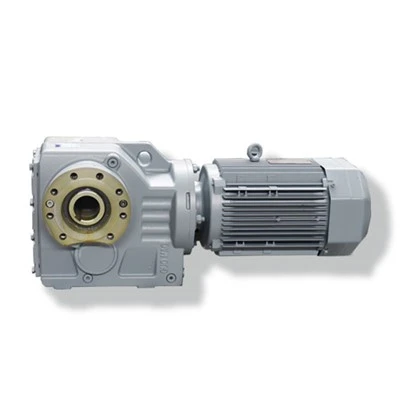
First, let’s get one thing straight: standard gearboxes aren’t garbage. If you need a 50:1 ratio for a conveyor belt that runs 8 hours a day, 5 days a week, in a temperature-controlled warehouse, a stock unit from a big-name supplier will likely outlive the warranties (and maybe even you) for a lot less cash. I’ve seen it a hundred times. But here’s the catch—most of the people reaching out to me about custom gearboxes aren’t running cookie-cutter setups. They’re the ones whose machinery is pushed to its absolute limit, or has weird quirks that stock gearboxes just can’t handle. Let’s talk about reliability, because that’s the name of the game here—not just “working,” but working when you need it, with zero unplanned downtime, and not costing you a fortune in repairs.
Let me give you a recent example. A guy hit me up last month from a grain processing plant. He had a stock gearbox on his auger that moved wheat from the silo to the processing line. The stock unit was rated for 24/7 operation, but it kept failing every 3 months. Why? Because wheat isn’t fluffy and consistent—there are clumps, occasional rocks, and humidity that turns it into a sticky mess. The stock gearbox’s seals were made for “average” conditions, and the bearings were sized for a steady, uniform load. When a 20-pound clump of hard wheat hit the auger, that stock unit would jolt, and the bearings would wear out fast. We built a custom unit for him: upgraded seals that can handle high humidity and grime, over-sized bearings rated for shock loads up to 3x the normal run, and a gear ratio tuned specifically to his auger’s torque curve (not some one-size-fits-all spec). 6 months in, he hasn’t called about a failure. That’s reliability.
Now, let’s get into the science part—no, not the stuff you forgot from high school physics, just the stuff that actually impacts how a gearbox holds up. Standard gearboxes are designed for the “lowest common denominator” of use cases. Their engineers pick materials, component sizes, and lubrication that works for 80% of applications. That means they’re conservative, but only for those exact use cases. If your application deviates even a little—say, you’re running at 90% load 24/7 instead of 50% 8-hour days, or you’re in a coastal plant with salty air that eats away at metal—those “conservative” specs become a weak point.
Custom gearboxes, on the other hand, are built to match your exact load profile, environment, and duty cycle. We don’t just swap a part here or there—we start with your specs: how much torque do you actually need? (Not the over-estimated number that safety guidelines say, but the real number your machine pulls when it’s pushing hard.) What’s the ambient temperature? Do you have dust, moisture, chemicals? How often do you need to perform maintenance? For the grain plant, that meant skipping the stock’s standard nitrile seals and going with a polyurethane blend that repels wheat dust and resists high humidity. For a solar tracker company I worked with, their gearboxes have to handle extreme temperature swings (from -20°F in the winter to 120°F in the summer) and constant vibration. We used stainless steel housing to fight corrosion and a specialized lubricant that doesn’t thin out or get too thick when temps drop.
Here’s the thing people don’t talk about: downtime costs way more than the gearbox itself. If your stock gearbox fails on a Friday night, and you have to order a replacement (wait time 3-5 days), you’re losing production, missing deadlines, maybe even paying overtime to get your line back up fast. With a custom gearbox, we build them to last longer, but also—wait for it—we design them for faster maintenance. No more hunting for a rare replacement part. We use standard (but oversized, rated) components where possible, so if something does need fixing, you can get it locally instead of waiting for a custom part to ship. I had a mining client last year who switched from stock to custom gearboxes. Before, they spent $15,000 a month on downtime and repairs. Now? They spend $8,000 on the gearbox, and less than $1,000 a month on maintenance. That’s not a loss—that’s a win.
But hold on—isn’t a custom gearbox more expensive up front? Yeah, sometimes. But let’s do the math. A stock gearbox might cost $2,000, but it fails every 3 months. Over a year, that’s $8,000 in replacements, plus downtime costs. A custom gearbox might cost $6,000, and last 5 years with almost no issues. That’s $1,200 a year—way cheaper. And that’s not even counting the hidden costs: damaged products when your line stops, lost clients, overtime pay for your team. Reliability isn’t just about the gearbox—it’s about keeping your entire operation running.
Now, I’m not gonna lie—custom gearboxes aren’t for everyone. If you’re a small business with a hobby machine that runs 40 hours a week in a climate-controlled garage, a stock unit is totally fine. It’s cheaper, easier to replace, and you won’t notice the difference. But if you’re a mid-sized plant, a mine, a renewable energy company, or anyone whose production line is their bread and butter? Custom isn’t a “nice-to-have”—it’s a way to protect your bottom line.
I’ve heard the arguments: “Stock gearboxes are tested!” Yeah, they are—tested in a lab, under perfect conditions. But your machine doesn’t run in a lab. It runs in the real world, with real problems: power surges, unexpected loads, dusty air, extreme temperatures. A custom gearbox is built in the real world, with your specific real-world problems in mind.
Let’s circle back to the original question: Are customized gearboxes more reliable than standard ones? The answer is: if your application is outside the “average” use case, absolutely. Stock gearboxes are reliable for stock jobs. Custom gearboxes are reliable when you need more.

At the end of the day, reliability isn’t about what’s made to fit everything—it’s about what’s made to fit you. If your gearbox is failing when you can’t afford it, or if you’re tired of putting band-aids on a setup that was never right in the first place, let’s chat. I won’t try to sell you a custom gearbox if a stock one works better—that’s just good business. But if you need something that’s built to last your way, give me a holler. We can break down your needs, run the numbers, and figure out what makes sense for your operation. No pressure, no salesy garbage, just real talk about keeping your line running.
Cycloidal Reducer References:
- Machinery Lubrication Magazine. "Impact of Load Profile on Gearbox Reliability." 2022.
- American Gear Manufacturers Association (AGMA). "Custom vs. Standard Gearbox Performance for Industrial Applications." 2021.
- International Organization for Standardization (ISO). "Gearbox Design for Extreme Environmental Conditions." ISO 14801:2020.
- Plant Engineering. "Hidden Costs of Unplanned Downtime in Industrial Operations." 2023.
- Grain & Feed Processing Technology. "Equipment Reliability for High-Dust, High-Humidity Environments." 2022.
Shandong Guomao Guotai Reducer Co., Ltd.
We are one of the most professional overloaded non-standard series reducers manufacturers and suppliers in China, specialized in providing high quality products and efficient solutions to global clients. Welcome to buy durable overloaded non-standard series reducers for sale here from our factory. For price consultation, contact us.
Address: No. 55-1 Zhichu Road, Zhifu District, Yantai City, Shandong Province. Shandong GuomaoGuotai Reducer Co., Ltd
E-mail: sales@cnspeedreducer.com
WebSite: https://www.sdguomaoreducer.com/
