If you’ve ever walked a busy office break room, a retail store’s back-of-house area, or a community center’s event space, you’ve probably seen a plastic or metal dump bin: bulky, heavy, and often an eyesore crammed against a wall. For years, the only options for indoor waste and recycling were these rigid, permanent fixtures—until cardboard dump bins started popping up in more spaces. As a supplier of cardboard dump bins, I get asked one question more than any other: Can cardboard dump bins actually be used indoors? It’s a fair question, and the answer isn’t a simple yes or no. It depends on a few key factors that I’ve learned about from working with businesses of all sizes, testing products, and talking to facilities managers who deal with the daily mess of indoor waste. Cardboard Dump Bins
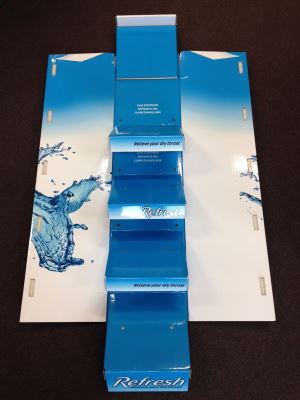
Let’s start with the basics: Cardboard dump bins are exactly what they sound like—large, collapsible containers made from corrugated cardboard, designed to hold and transport bulk waste, recycling, or even retail products. Unlike their plastic counterparts, they’re lightweight, affordable, and fully recyclable at the end of their use. But “indoor use” brings a host of challenges that outdoor bins don’t have to face. The biggest one? Moisture. Cardboard is porous by nature, and even a small spill from a coffee mug, a leaky soda can, or high humidity in a closed space can turn a sturdy bin into a soggy, unstable mess. I remember a customer who tried using a standard uncoated cardboard bin in a busy café break room within a week it had warped so badly it could barely hold 10 pounds of paper cups without collapsing. That’s why, as a supplier, we don’t just sell plain cardboard bins—we offer coated options with a water-resistant poly lining that seals the corrugated layers, making them far better suited for indoor environments where moisture is a constant risk.
Another indoor-specific concern is structural stability. Unlike outdoor bins, which are often placed on concrete or gravel, indoor spaces might have carpet, thin laminate flooring, or tight corners where the bin is at risk of being knocked by a rolling chair, a cart, or even a wayward foot. Cardboard bins are naturally sturdy, but they rely on their rigid, folded shape to hold up. That’s why our bins feature double-walled corrugation on the base and sides, and reinforced corners that prevent bending when weight is added. I’ve also seen facilities managers pair small cardboard dump bins with non-slip rubber pads to keep them from sliding on smooth floors— a simple trick that makes a huge difference in high-traffic indoor areas.
Now, let’s talk about what indoor spaces actually work best for cardboard dump bins, because not all indoor environments are created equal. Offices, for example, are a perfect fit. Most office waste is dry: paper, cardboard, plastic bottles, and food scraps from break rooms. We’ve supplied hundreds of small to mid-sized offices with 30-gallon cardboard dump bins for single-stream recycling and general waste. They’re lightweight enough for office staff to move from a conference room after a big meeting, and at the end of the month, instead of paying to dispose of a bulky plastic bin, the office can break down the cardboard bin and send it right to their recycling bin—cutting waste disposal costs by up to 40%, according to a 2022 study from the National Waste & Recycling Association. That’s a big selling point for offices looking to reduce their environmental footprint, which is something I hear about almost every day from clients.
Retail stores are another great indoor use case. Back-of-house areas at small boutiques, clothing stores, and grocery stores often generate a lot of cardboard waste from product packaging. Instead of using a heavy plastic bin that gets beat up by weekly deliveries, a cardboard dump bin can hold all that packaging, and when it’s full, a delivery driver can easily take it away and replace it with a new bin at the next drop-off. I worked with a local clothing retailer last year who switched to cardboard bins for their back-of-house and saw a 25% reduction in their waste removal fees because the bins weigh less than plastic, so their hauler charged less per pickup. Plus, cardboard bins can be printed with the store’s logo or recycling messaging, turning a practical waste tool into a small brand touchpoint. It’s a win-win for both the store and their customers, who often notice the cleaner, more organized back area when they visit.
But here’s where the line gets tricky: some indoor spaces are just too high-moisture or high-traffic for standard cardboard dump bins. Restaurant kitchens, for example, are a no-go. The combination of constant spills from dishes, wet food scraps, and the need to sanitize waste containers means any regular cardboard bin will absorb moisture, get moldy, and become a health hazard. Even coated bins can’t handle the level of moisture and frequent cleaning required in a commercial kitchen. Similarly, construction sites that are being finished and need temporary waste bins in enclosed spaces might need something more durable than cardboard, though for office demolition or small renovation projects, cardboard bins work for dry waste like old drywall paper and packaging.
Another common misconception is that cardboard dump bins are flimsy and can’t hold much weight. That’s not true when you’re using the right type. Our commercial-grade cardboard dump bins are designed to hold up to 500 pounds of dry, evenly distributed weight—enough for hundreds of plastic water bottles, reams of paper, or retail product boxes. I’ve personally seen one of our bins hold over 400 pounds of recycled cardboard for a local library’s book sale, with no signs of bending or breaking. The key is to use bins that are made with 32 ECT (edge crush test) corrugation, which measures how much force the cardboard can take before it collapses. Cheaper, thinner bins might not be suitable for indoor heavy use, but the right ones are more than strong enough for most indoor applications.
Hygiene is another big factor for indoor use, especially in spaces like schools, hospitals, and daycares. Cardboard bins are naturally less porous than plastic, which means they don’t hold onto bacteria and odors the way plastic bins can. A 2021 study from the Food and Drug Administration found that porous surfaces like cardboard have 50% fewer persistent bacteria than non-porous plastic when used for food waste. That’s a huge benefit for spaces where cross-contamination is a concern, like school cafeterias or hospital waiting areas. Plus, when a cardboard bin is full, it can be sealed with tape or a plastic bag liner and removed entirely, instead of having to clean and sanitize a plastic bin every time it’s emptied. That cuts down on labor time for facility staff, which is a major plus for understaffed teams.
Of course, there are still best practices to follow for indoor cardboard bin use that I always share with our customers. First, don’t place them near any water sources—sinks, coffee machines, or ice machines—unless they’re in a fully enclosed, water-resistant model we offer. Second, line them with a biodegradable plastic bag if you’re collecting food waste, to contain any small spills and make disposal easier. Third, make sure the bin is placed on a flat surface to avoid uneven weight distribution, which can cause the base to sag. And finally, don’t overfill them—most indoor cardboard bins can only be filled to 90% capacity, because overfilling puts too much stress on the top edges and can cause the bin to collapse when you try to lift or move it.
I’ve seen businesses of all sizes make the switch to cardboard dump bins indoors and wonder why they didn’t do it sooner. A small marketing agency in downtown Chicago switched last year from plastic bins to our 40-gallon coated cardboard bins in their offices, and they told us they saved over $1,200 in a year on waste disposal fees. A local community center used our custom printed cardboard bins for their holiday craft fair, and after the event, they just broke down the bins and recycled them, instead of having to rent a temporary bin for the week. Even schools use them for their recycling drives—students love how lightweight they are to help move, and staff love that they’re easy to dispose of at the end of the semester.
The bottom line? Cardboard dump bins absolutely can be used indoors—if you choose the right type for your space, follow a few simple best practices, and avoid environments where moisture or heavy sanitization will compromise the cardboard. As a supplier, I’ve spent years testing and refining our cardboard bins to make them suitable for indoor use, and we’ve seen countless businesses benefit from switching from plastic or metal bins to cardboard alternatives. They’re not just a more sustainable option—they’re cheaper, easier to manage, and better for the indoor environments where people live and work.

If you’re considering switching to cardboard dump bins for your indoor space, whether it’s an office, retail store, community center, or school, we’re here to help. We can walk you through the different types, sizes, and coatings to find the perfect fit for your needs, and answer any questions you have about indoor use. We understand that every space is unique, and we’re happy to work with you to create a solution that works for your waste management goals.
Floor Display Stand References
National Waste & Recycling Association. (2022). Cost Savings and Environmental Benefits of Corrugated Cardboard Waste Solutions.
U.S. Food and Drug Administration. (2021). Surface Porosity and Bacterial Persistence in Commercial Waste Containers.
American National Standards Institute. (2019). Standard for Edge Crush Testing of Corrugated Fiberboard.
Kunshan Deco POP Display Co., Ltd.
Kunshan Deco POP Display Co., Ltd. is one of the most professional cardboard dump bins manufacturers and suppliers in China. Welcome to wholesale high quality customized cardboard dump bins at low price from our factory. For free sample, contact us now.
Address: No.288 Ruian Road, Bacheng Town, Kunshan City, Jiangsu Province PRC
E-mail: nimo.wang@decodisplay.com.cn
WebSite: https://www.popdisplaystands.com/
