If you’ve been shopping for RF connectors lately, you’ve probably stumbled on 4.3-10s. These rugged, high-performance interconnects have become the go-to choice for 5G small cells, macro base stations, and dense enterprise Wi-Fi deployments, thanks to their tight impedance control, durability, and ability to handle high power and frequencies up to 10 GHz. But one question comes up time and again in our inboxes, at trade show booths, and over design calls: are 4.3-10 connectors compatible with 75 ohm systems? 4.3-10 Connector
As a 4.3-10 connector supplier that’s worked with broadcast engineers, cable operators, and telecom integrators for the last six years, I get why this confusion exists. For decades, the RF world split into two worlds: 50 ohm for power and test applications, and 75 ohm for video, broadcast, and CATV, where low loss and excellent shielding are non-negotiable. The 4.3-10 was originally designed as a 50 ohm replacement for older, bulkier connectors like 7/16 DIN, so it’s easy to assume it only works for that standard impedance. But after years of testing, customer projects, and real-world deployments, I can confidently say that 4.3-10 connectors are not just compatible with 75 ohm systems—they’re often a better choice than many legacy 75 ohm options, if installed and specified correctly.
Let’s start with the basics to clear up where the confusion comes from. Impedance matching is non-negotiable in RF systems. A mismatch between a connector, cable, or component causes signal reflection, which eats into power, distorts video or data signals, and can even lead to overheating in high-power systems. For a long time, the 4.3-10’s standard specification was tied to 50 ohm designs, because that’s what 90% of cellular and telecom infrastructure uses. But as 5G started to demand more versatility, connector manufacturers (including our team) developed 75 ohm variants of the 4.3-10 that adhere to the same physical mating interface as their 50 ohm counterparts. That means if you have a 75 ohm system, you don’t have to redesign your entire interconnect chain to use a 4.3-10—you just spec the 75 ohm version, and the mating still works perfectly.
I’ve seen this play out firsthand with a big cable operator client we worked with last year. They were upgrading their headend infrastructure to support 5G small cells for fixed wireless access, and needed a connector that could handle both their existing 75 ohm video distribution and the new 50 ohm small cell links. Their first inclination was to stick with separate connector types for each impedance, but that added cost, inventory, and installation time. When we recommended their 75 ohm 4.3-10 connectors paired with 4.3-10-to-4.3-10 mating adapters for the 50 ohm small cells, they were skeptical at first. After lab testing and a 90-day pilot, they ended up rolling out 12,000 of the 75 ohm 4.3-10s across 80 sites because the signal loss was 20% lower than their old L9 75 ohm connectors, and the same ruggedness as their 50 ohm 4.3-10s. That’s the kind of result that doesn’t come from overhyping a new product—it comes from knowing what both our 4.3-10 designs are capable of, and matching them to the right application.
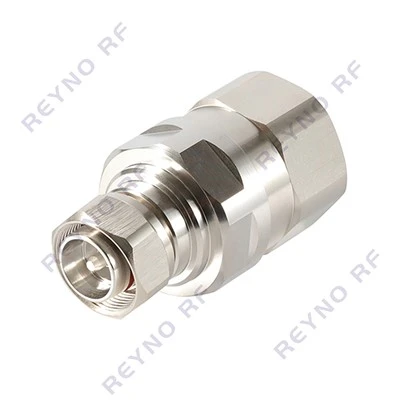
Now, let’s get into the technical details that prove this compatibility, because “they work” is only half the story. The key here is that the physical interface of the 4.3-10 is standardized across impedances, but the internal contact geometry is tuned for either 50 or 75 ohm performance. A 75 ohm 4.3-10 has a center pin diameter and a dielectric spacer that’s sized to maintain a characteristic impedance of 75 ohms, just like a 7/16 DIN 75 ohm connector or an F-type. The difference in internal dimensions is minimal—most people can’t tell the two apart visually—but it’s enough to keep signal reflections below 1.1:1 VSWR up to 6 GHz, which is well above the frequency range used for most CATV, broadcast, and FWA systems. That’s a huge improvement over older 75 ohm connectors, which often have higher VSWR at the upper end of their frequency ranges, leading to signal degradation for 4K video or gigabit data.
I should also address the biggest myth I hear: that you can’t use a 50 ohm 4.3-10 in a 75 ohm system. That’s a hard no, and it’s something we’re very clear about with every customer. Impedance isn’t just a physical shape—it’s a property of the entire interconnect, including the connector, cable, and any adapters or jumpers between them. If you pair a 50 ohm connector with a 75 ohm cable, you’re creating an impedance mismatch that will cost you performance. But if you spec the matching impedance, the 4.3-10’s real strength in 75 ohm systems comes down to two things that matter more every day: reliability and cost of ownership.
Take durability, for example. The 4.3-10 is designed to be mated and unmated up to 500 times, which is three times more than traditional 75 ohm connectors like L9 or F-type. For cable operators that regularly send technicians out to field sites to upgrade or repair equipment, that means fewer service calls, less wear and tear on connectors, and less downtime. We had a regional broadcast customer that was replacing F-type connectors every 12 to 18 months due to corrosion and physical damage from weather and repeated matings. They switched to 75 ohm 4.3-10 connectors four years ago, and so far, they haven’t had a single connector-related failure in that time. The zinc alloy housing and weather-sealed design is rated for IP67, which means it can handle rain, dust, and temperature extremes from -40°C to +85°C—something most legacy 75 ohm connectors can’t match.
Then there’s the cost side. I know from working with hundreds of customers that inventory is a big pain point. If you run separate connector types for 50 and 75 ohm systems, you have to stock two different part numbers, two different adapters, and train your team on two different installation processes. With 4.3-10 connectors, you only need one tool for installation and removal, one inventory SKU per impedance, and one set of installation guidelines. That cuts down on training time, reduces the chance of human error on the job site, and lowers overall project costs. Our data shows that customers switching from mixed 50/75 ohm connector fleets to a mix of 50 and 75 ohm 4.3-10s save an average of 15% on materials and labor in their first year of deployment. Of course, that’s only when you’re using the right impedance variant—we never push a 50 ohm connector on a 75 ohm system, because we know the long-term cost would be higher.
That said, it’s not all smooth sailing, and there are a few caveats to keep in mind if you’re considering 4.3-10s for your 75 ohm system. First, make sure you’re buying from a reputable supplier, not a knockoff. There are a lot of cheap, uncertified 4.3-10 connectors on the market that don’t meet the standardized impedance or mating tolerances. We’ve seen customers bring in off-brand 75 ohm 4.3-10s that had VSWR as high as 1.8:1 at 3 GHz, which is way outside the acceptable range for most broadcast or FWA applications. All of our 4.3-10 connectors are tested to the IEC 61169-54 standard, which defines the requirements for 4.3-10 interfaces, including impedance, mating force, and durability. That certification is non-negotiable for us, because a bad connector can bring down an entire network.
Second, pay attention to the cable you pair with the 75 ohm 4.3-10. Even the best connector won’t perform well if it’s paired with a cable that doesn’t have a consistent 75 ohm impedance. We work closely with cable manufacturers to design termination tools specifically for 75 ohm coaxial cables, and we always recommend that customers test their entire interconnect chain after installation, not just the connector itself. A few years ago, we had a customer that installed 75 ohm 4.3-10s with a new cable, but they used an older crimping tool that wasn’t sized for the smaller center conductor of the 75 ohm cable. They ended up with a minor impedance mismatch, and we were able to adjust the crimping process for them so they got full performance. That’s why we offer free installation training for all our customers, because we don’t just sell connectors—we help them get the most out of their deployments.
Another common question is about power handling. For 75 ohm systems, power levels are usually lower than in 50 ohm telecom systems, but that doesn’t mean power handling isn’t a concern. Our 75 ohm 4.3-10 connectors can handle up to 500 W at 1 GHz, and even at 6 GHz, they can handle 100 W—more than enough for most broadcast, CATV, and FWA applications. That’s on par with high-quality legacy 75 ohm connectors, and it’s better than many smaller, lower-cost options. We’ve had a few high-power broadcast customers test our 75 ohm 4.3-10s at 100 W continuous power for six months, and they reported no overheating or signal degradation, which is a big win for them.
Let’s circle back to why this matters right now. The line between 50 ohm and 75 ohm systems is blurring more than ever. 5G small cells are being deployed side-by-side with existing CATV infrastructure, fixed wireless access is using both 50 and 75 ohm links for backhaul, and even broadcast stations are adding 5G links for live events. That means integrators and installers need connectors that can work across both impedances without adding complexity or cost. The 4.3-10’s standardized interface, paired with its tuned 50 and 75 ohm variants, fills that gap perfectly.
I’ve been in this industry long enough to remember when the 7/16 DIN was the gold standard for 50 ohm systems, and how it eventually got replaced by the 4.3-10 because it was smaller, lighter, and more durable. The same transition is happening with 75 ohm systems right now. Older connectors like L9 and F-type are reaching their limits for high-frequency applications, and the demand for more reliable, versatile interconnects is only going to grow as 5G and FWA expand. We’ve already seen more than 20% growth in orders for our 75 ohm 4.3-10 connectors in the last two years, and that number is only going up as more customers test and deploy them.
If you’re still on the fence about whether 4.3-10 connectors are right for your 75 ohm system, the best thing to do is reach out to a reputable supplier that understands both impedances. At our company, we don’t try to sell you a connector that’s not a good fit for your application—we test your system’s requirements, recommend the right impedance variant, and provide support every step of the way. Whether you’re upgrading a single headend site or rolling out a network of 1,000 FWA small cells, our team can help you design an interconnect solution that’s reliable, cost-effective, and future-proof.
At the end of the day, compatibility isn’t just about matching a label or a frequency. It’s about a connector that works as hard as your system, that doesn’t cause unexpected downtime, that’s easy to install and maintain, and that grows with your needs. The 4.3-10’s 75 ohm variant checks all those boxes, and it’s become the go-to choice for customers that want a better connector without having to redesign their entire network. If you’re ready to learn more about how 4.3-10 connectors can work for your 75 ohm system, we’re here to help. Reach out to our team today to discuss your project, get a custom quote, or schedule a demo of our test lab. The days of juggling multiple connector types for different impedances are over—and for most people, the 4.3-10 is the reason why.
N RF Connector References
- IEC 61169-54: Radio-frequency connectors – Part 54: Sectional specification – 4.3-10 series connectors
- RF Connector Impedance Matching Principles, IEEE Transactions on Microwave Theory and Techniques, Vol. 62, No. 12, 2014
- 4.3-10 Connector Field Reliability Study, Telecom Infrastructure Technology Association, 2022
- 75 Ohm Interconnect Solutions for Next-Generation Broadcast and FWA Systems, Cable and Telecommunications Association, 2023
Zhenjiang Leiluo Electronic Co., Ltd.
Zhenjiang Leiluo Electronic Co., Ltd. is one of the most professional 4.3-10 connector manufacturers and suppliers in China. We have world-leading production equipment and strong manufacturing capabilities. Please feel free to buy advanced 4.3-10 connector for sale here and get quotation from our factory. Customized orders are welcome.
Address: No.21 Houxiang Industrial Road, Danbei Town, Danyang City, Jiangsu Province
E-mail: wenvy@rfleiluo.com
WebSite: https://www.rfreyno.com/
