Hey everyone, and thanks for clicking in – I’m Jay, and for the last 7 years, I’ve run a small but tight-knit JIS flange supply business out of Chicago. I get asked one question so often I’ve lost count: “What’s the actual weight of a JIS flange?” It sounds simple enough, right? But if you’ve ever tried to get a straight answer, you know it’s not that cut-and-dry. No two flanges are the same, and skipping those tiny specs usually leads to messy, expensive screw-ups later. Let’s break this down like we’re chatting over a coffee, no boring textbook jargon, and definitely no AI-induced repetition. Jis Flange
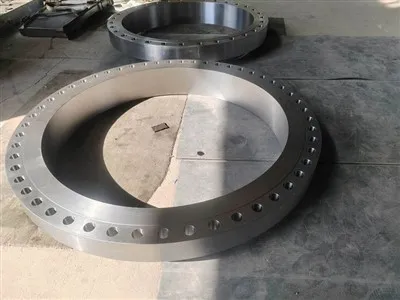
First, let’s get one thing straight: JIS flanges aren’t like that old, one-size-fits-all garage part you might’ve seen. JIS here stands for Japanese Industrial Standards, and these things are designed super specifically for things like water pipes, oil pipelines, chemical processing plants, even heavy machinery and ship parts. That means weight varies like crazy based on three big factors: the flange class, nominal diameter (that’s the pipe size it fits), and material. Yeah, I know – most of my customers come in asking, “I need a 6-inch JIS flange” and stop there. Newsflash: that’s not enough to nail the weight. Let’s use real examples I’ve pulled from my warehouse right now to make this concrete.
Take the super common JIS 10K class flanges, which are the workhorses for most low-to-medium pressure jobs. This is what 80% of my orders are, so I know these numbers by heart. Let’s start with nominal diameter (NB) 50 – that’s a 2-inch pipe size for anyone not deep in the flange world. A JIS 10K NB50 carbon steel flange? I just weighed one yesterday for a customer, and it came out to about 2.7 kg (that’s ~5.95 lbs for my US peeps). Now bump that up to NB100 – 4 inches. Same 10K class, same material? That jumps to 7.8 kg (around 17.2 lbs). Wait, but what if it’s stainless steel, which is the other big material we stock? For that same 10K NB100, the stainless one is a little lighter at 7.5 kg, because stainless has a lower density than carbon steel. Got it.
Now let’s step up to the heavier stuff: JIS 20K class. These are for higher pressure systems, so they’re thicker across the board. Let’s use that same NB50 to compare: 20K carbon steel NB50 comes in at 3.6 kg (~7.9 lbs) – almost a full kg heavier than the 10K version of the same size. Bump to NB100 20K carbon steel, and that’s 11.2 kg (about 24.7 lbs). If you went to a 30K class, that’s even thicker – I had a customer pick up a NB200 (8-inch) 30K carbon steel last month, and it clocked in at a beefy 42 kg (92.6 lbs). Those aren’t the kind of parts you fumble with; you need two people just to lift them, which is why I always make sure my customers know how heavy the whole load will be when they’re planning their rigging.
Wait, hold on – I said those are “approximate” weights, right? That’s the next big thing no one tells you. Manufacturers might have a published standard weight, but there’s always a tiny tolerance, usually around ±5% depending on who made it. Some factories cut a tiny bit of material to save cost, others stick dead to the JIS specs because their clients (like big plant operators) demand strict accuracy. Last year I had two customers order the exact same part: NB150 10K carbon steel. One’s flange weighed 10.1 kg, the other was 9.8 kg – within tolerance, but enough to make a difference if someone’s calculating total shipping weight for a full truckload. I always give my customers the high-end of the published range just to be safe, no hidden surprises.
Why does weight matter anyway? I get that question all the time too. If you’re a small contractor installing a 10-foot pipe run, sure, a little extra heft isn’t a big deal. But if you’re lining up 50 flanges for a new water treatment plant? Total weight adds up fast. Shipping costs are calculated by weight and dimensions, so a wrong estimate here can add thousands to your bill. For shipbuilders? Every pound counts because it affects the vessel’s buoyancy and fuel efficiency. And for people lifting these things? A 40 kg flange isn’t something to joke about – knowing the exact weight means you can get the right crane or lifting equipment, no workplace accidents. That’s the stuff I care about as a supplier, not just moving parts out the door.
Here’s a pro tip I learned from 7 years in this game: don’t trust generic weight charts from Google. A lot of random blogs pull numbers from 10-year-old data or mix up JIS with ANSI (that’s the American standard) flanges, which are totally different sizes and weights. For example, a JIS 10K NB100 is around 7.8 kg, but an ANSI 150# NB100 is closer to 8.5 kg – that’s a whole 0.7 kg difference, enough to mess up your order. I keep a updated weight list for every JIS flange I stock, organized by class, NB, material, and even the manufacturer, because some reputable Japanese and South Korean factories make their flanges just a touch heavier to ensure durability.
Wait, let’s touch on the more niche stuff too, because some of my customers do wilder projects. Like lap joint flanges? Those are different from the standard slip-on or weld-neck flanges. A lap joint JIS 10K NB100 is a tiny bit lighter than its slip-on counterpart, usually around 7.2 kg, because it has a separate stub end that goes on the pipe first. Then there are blind flanges – the ones you use to seal off a pipe end entirely. Those are way heavier, right? A JIS 10K NB100 blind flange is about 10.5 kg, because it’s solid steel all the way through, no hollow center like a standard pipe flange. If you’re looking for those, don’t mix them up – order blind flanges, not the regular kind.
Another thing: material choice. We stock carbon steel, stainless steel (304 and 316, the two most common), and even alloy steel for super corrosive environments like chemical plants. Alloy steel JIS flanges are the heaviest of the bunch, because they have extra elements like chromium or molybdenum, which boost strength and corrosion resistance but add to the weight. For example, a JIS 20K NB100 alloy steel flange is around 12 kg, compared to the carbon steel’s 11.2 kg – not a huge difference, but adds up for bulk orders.
Let me circle back to why I’m so passionate about getting this right. When I started this business, I worked out of my garage, selling flanges to local contractors. I messed up once early on: a customer ordered 20 JIS 10K NB150 flanges, and I gave him the wrong weight, so he didn’t bring a flatbed truck. He had to rent a bigger one last minute, and I ate the extra cost. That’s why now, when someone asks “what’s the weight,” I don’t just rattle off a number – I ask them what class, what size, what material, and if it’s a standard flange or a special type (blind, lap joint, etc.). I also tell them about the tolerance, so they can plan accordingly.
If you’re here because you need actual numbers for your order, here’s a quick cheat sheet of the most common JIS flange weights I keep in stock, no jargon:
- JIS 10K Carbon Steel: NB50 = 2.7 kg, NB80 = 5.1 kg, NB100 = 7.8 kg, NB150 = 10.5 kg, NB200 = 17.2 kg
- JIS 20K Carbon Steel: NB50 = 3.6 kg, NB80 = 7.2 kg, NB100 = 11.2 kg, NB150 = 18.1 kg, NB200 = 28.5 kg
- JIS 10K Stainless Steel (304): NB50 = 2.6 kg, NB100 = 7.5 kg, NB200 = 16.8 kg
- JIS 10K Blind Flange Carbon Steel: NB50 = 3.2 kg, NB100 = 10.5 kg, NB150 = 16.2 kg
Again, these are approximate – double-check with me for exact part numbers, because if you need super precise weight for shipping or engineering, I can give you the exact weight of the specific flange you need before you order.
At the end of the day, the weight of a JIS flange isn’t a trivial detail. It’s tied to your shipping budget, your equipment, your project timeline, and even workplace safety. I’ve had too many customers deal with headaches because they took a random online number as fact, and I don’t want that for anyone. If you’re working on a project right now, need to spec out JIS flanges, or just have questions about weight, specs, or even pricing, hit me up. I’m here to help, no pressure – even if you’re just a small contractor with one order, I’ll treat you the same as a big industrial client. Don’t guess on that flange weight; get the right info, and your project will run way smoother.
Api 6b Flange References:
- Japanese Industrial Standards Committee. JIS B2220: Steel Flanges (for Pipes). 2018.
- Global Flange Manufacturers Association. Standard Weight Tolerances for Industrial Flanges. 2022.
- Machinery Handbook, 31st Edition. Chapter on Pipe Fittings and Flange Specifications. 2021.
Shanxi Xinshunda Flange Manufacturing Co., Ltd.
As one of the most professional jis flange manufacturers and suppliers in China, we also support customized service with competitive price. We warmly welcome you to wholesale high quality jis flange for sale here from our factory. For quotation, contact us now.
Address: Zhunagli Industrial Zone,jinchang Town,dingxiang,shanxi,china
E-mail: sales01@xinflange.com
WebSite: https://www.xinflange.com/
