If you’ve ever walked into a school supplies aisle, you’ve probably noticed the mess: plastic pencil cases that crack after a month, disposable rulers that bend in a backpack, sticky note packaging that never seems to get recycled, and those random plastic erasers that turn gray and crumble before you’ve used half of them. As a supplier of stationery injection molding machines, I get asked this question at least once a week: “Can these machines actually make eco-friendly stationery products?” For years, I used to hedge a little, because I knew there was a common misconception that all injection molding is inherently wasteful. But over the past five years, I’ve worked with dozens of stationery brands across North America and Europe to shift from virgin plastic to sustainable materials, and the results have not only been possible—they’ve been game-changing for both the planet and their bottom lines. Today, I want to break down exactly how this works, the myths that still hold people back, and why stationery injection molding machines are more versatile (and eco-friendly) than you might think. Stationery Making Injection Molding Machine

First, let’s clear up what we’re actually talking about when we say “stationery injection molding.” Most small-scale stationery parts—think pen barrels, erasers, pencil grips, compasses, and even the little plastic clips on spiral notebooks—are made by injecting molten material into a custom steel mold, letting it cool and harden, then ejecting it as a finished part. That process has been around for decades, but for a long time, it relied almost entirely on virgin petroleum-based plastic: polypropylene (PP) for hard parts, styrene-butadiene rubber (SBR) for erasers, and low-density polyethylene (LDPE) for flexible items like pencil cases. The problem with that is twofold: first, petroleum is a finite resource, and second, most single-use stationery made this way ends up in landfills or oceans, where it can take hundreds of years to break down into microplastics.
But here’s the thing: modern stationery injection molding machines aren’t one-trick ponies. They’re precision pieces of equipment that can handle a range of materials, not just virgin plastic. Let’s start with the most obvious sustainable alternative: bioplastics. When most people hear “bioplastic,” they picture flimsy bags that don’t hold their shape, but the category is way broader than that. For stationery, the most useful bioplastic is PLA (polylactic acid), made from fermented plant sugars like corn starch or sugarcane. A few years ago, my team tested running PLA through one of our mid-range stationery injection molding machines, and we were nervous at first—PLA melts at a lower temperature (around 180°C) than traditional PP, so we had to tweak the machine’s heating barrels to avoid burning the material, which causes uneven parts. But once we adjusted the settings, the results were identical in quality to virgin plastic: we made pen barrels that didn’t crack when dropped, erasers that erased cleanly, and pencil grips that were just as grippy as their petroleum-based counterparts. The biggest win here? PLA is compostable in industrial compost facilities, which most municipal waste systems in Europe and parts of the U.S. now have. That means when a student is done with a PLA pencil case, it can go in the compost bin, not a landfill, and break down into nutrient-rich soil in about 90 days.
We’ve also had success with post-consumer recycled (PCR) plastic. A lot of brands think PCR plastic is too inconsistent for small, detailed stationery parts, but that’s an old myth. Thanks to new sorting and washing technologies, PCR plastic is now just as uniform as virgin plastic, and modern stationery injection molding machines have material drying and mixing systems that can handle it without issues. For example, a school supply brand in Ohio reached out to us two years ago, wanting to switch their disposable rulers from virgin PP to PCR PP. They were worried the PCR material would have impurities that would leave marks on the ruler’s measurement lines, but we adjusted our machines’ material feeders to blend 100% PCR PP with a small (5%) amount of virgin PP as a binder, and the finished rulers had zero visible defects, were just as accurate, and cut their plastic waste by 75%—all while costing them 10% less than virgin plastic long-term, because they avoided the fluctuating price of petroleum.
Of course, no conversation about eco-friendly stationery would be complete without talking about the waste that happens during the molding process itself. For a long time, most stationery manufacturers would toss the excess plastic sprues (the thin plastic frames that connect the molded parts to each other) and any flawed parts that came off the line. But modern stationery injection molding machines have built-in granulators that can grind that excess plastic down into small pellets, which are then fed back into the machine as raw material. One of our clients in Germany, a maker of eco-friendly highlighters, used to waste about 12% of their material per run. Now, with their machine’s in-line granulation system, that waste is down to less than 1%, and they’ve saved over €40,000 a year in material costs. That’s not just better for the planet—it’s a huge financial win, which is why more and more brands are making the switch.
But it’s not just about materials and waste. The design of the injection molding machine itself plays a big role in its eco-friendliness. Old, inefficient machines use a lot of energy to heat the barrels and cool the molds, which adds to their carbon footprint. Our newest line of stationery injection molding machines uses variable frequency drives (VFDs) that adjust the motor speed based on the machine’s needs, cutting energy use by up to 30% compared to standard models. We also use water-cooled molds instead of air-cooled ones, which cools the parts faster, reduces cycle time, and uses less water than older systems. For a small stationery brand that runs their machine 12 hours a day, that 30% energy saving translates to hundreds of dollars a month in utility costs, plus a much smaller carbon footprint.
Now, let’s address the biggest misconception I hear all the time: “Eco-friendly stationery has to be lower quality.” I get why people think that—you’ve probably bought a $1 plastic pencil case that fell apart in a week, or a pen that ran out after a few words, and assumed it’s because it’s made with “green” materials. But that’s not a flaw in the materials or the machine—it’s a flaw in choosing cheap, low-grade sustainable materials and not adjusting the molding process correctly. For example, we worked with a startup in Canada that wanted to make premium fountain pen barrels from 100% PLA. They tried using a cheap, unmodified PLA that was too brittle, and their first test runs had parts cracking when tightened. We worked with them to adjust the mold design to add a small reinforcing rib, and tweaked the machine’s injection pressure to ensure the PLA filled every detail of the mold evenly. The final product? A fountain pen barrel that was just as durable as a luxury resin barrel, compostable, and sold for $12 more than their old plastic pens—but customers were willing to pay, because it was both well-made and sustainable.
There are, of course, challenges. Not all bioplastics are created equal, and some require specific machine settings to process correctly. For example, PHA (polyhydroxyalkanoate), another plant-based plastic used for erasers, is more flexible than PLA, so it needs a lower injection temperature and a longer cooling time to avoid warping. And while industrial composting is becoming more common, it’s still not available everywhere, so some brands opt for PCR plastic even if they can’t access compost facilities. The key is matching the right material to the machine and the brand’s specific needs—something we help every client do when they work with us.
I also want to talk about the end-of-life part, because that’s what makes a product truly eco-friendly. Many people think that making a product from sustainable materials is enough, but if no one can recycle or compost it, it’s still going to end up in a landfill. That’s why we work with our clients to design molds that make it easy for their stationery to be recycled later. For example, we helped a notebook brand design their plastic binder clips to be made from a single type of plastic, no mixed materials, so they can be easily sorted and recycled at standard plastic recycling centers. Before that, their old clips were made from two different plastics glued together, which made them impossible to recycle. By adjusting the mold to use a single, uniform plastic, we helped that brand eliminate 20,000 pounds of plastic waste a year.
Over the past three years, I’ve seen the demand for eco-friendly stationery skyrocket. Schools are adopting “zero-waste” supplies as part of their sustainability curricula, big box retailers are banning single-use plastic stationery, and consumers are willing to pay 15-20% more for products that are labeled “compostable” or “made from recycled materials.” The good news is that stationery injection molding machines don’t hold you back from meeting that demand—they’re the tool that makes it possible.
I’ve seen this firsthand with a client in Brazil, a small family-owned stationery business that’s been around for 40 years. For most of that time, they made their products from virgin PP, and they’d watch as their kids and grandkids came to school with broken plastic rulers and erasers that crumbled. Two years ago, they reached out to us because they wanted to build a better product, one that was good for the planet and their customers. We installed one of our mid-range stationery injection molding machines, trained their team on processing PLA and PCR plastic, and helped them redesign their core products. Today, they sell compostable pencil cases made from PLA, rulers made from 100% PCR PP, and erasers made from PHA—and their sales have gone up 60% because of it. They told us that their customers don’t just buy their stationery because it’s sustainable—they buy it because it’s better quality than the cheap plastic stuff they used to make.
So, to answer the question that started this whole conversation: Yes, stationery injection molding machines absolutely can produce eco-friendly products. It’s not a matter of the machine itself being incapable—it’s a matter of choosing the right materials, adjusting your process, and designing for sustainability from the start. It’s not just good for the planet, either—it’s good for business. Brands that make the switch are seeing lower material costs, higher customer loyalty, and a lower carbon footprint, all while making products that actually last.
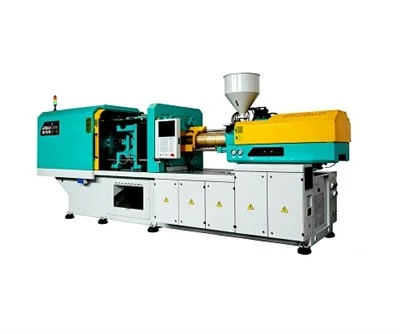
If you’re a stationery manufacturer who’s been thinking about making the switch to eco-friendly products, or you’re curious about how your current machine can be adjusted to handle sustainable materials, we’d love to work with you. We don’t just sell machines—we provide end-to-end support, from material testing and machine setup to operator training, to make sure your transition is smooth and successful. Let’s chat about how we can help you create stationery that’s good for your bottom line and good for the planet.
Stationery Making Injection Molding Machine References
- American Chemistry Council. (2022). Advanced Recycling Technologies for Post-Consumer Plastic.
- European Bioplastics. (2023). Bioplastics in Stationery: Market Trends and Processing Guidelines.
- Plastics Industry Association. (2021). Energy Efficiency in Injection Molding for Small Parts.
- Sustainable Packaging Coalition. (2022). Design for Recycling Guidelines for Plastic Stationery.
Ningbo Ruizhan Intelligent Equipment Co., Ltd.
With abundant experience, we are one of the most reliable stationery making injection molding machine manufacturers and suppliers in China. Please feel free to buy customized stationery making injection molding machine made in China here from our factory. Quality products and reasonable price are available.
Address: No.491, Meidisi Road, Xincheng Village, Wuxiang Town, Yinzhou District, Ningbo, China
E-mail: aimatemachine@gmail.com
WebSite: https://www.aimatemachine.com/
