If you’ve ever found yourself mid-camping trip, your portable camping power station dead at the exact moment you want to power your cooler to keep fish fresh, run a mini-fridge for your kid’s allergy meds, or charge a satellite communicator to call for help, you know the panic that hits. As a supplier of these units, I get asked one question more than any other: “How long does it take to charge a portable camping power station?” It’s not a one-size-fits-all answer, and there’s a lot more to it than just “plug it in and wait.” Let me break this down with the kind of real-world, on-the-ground context that comes from working with campers, DIYers, and outdoor adventurers every single day. Portable Camping Power Station
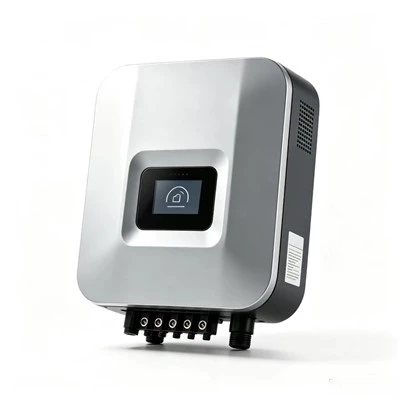
First, let’s start with the basics that most people skip: not all power stations are the same. A 100Wh model, small enough to slip into a backpack for a weekend day hike, charges way faster than a 2,000Wh unit that can run a small RV’s lights and fridge for 12 hours. But even within the same capacity, factors like the charger you use, your power source, and how much charge is already in the unit will change everything. I’ve had customers text me at 2 a.m. panicking because their 500Wh station took 8 hours to charge from a wall outlet, only to realize they used a cheap 10W charger instead of the 40W one that came with it. That’s a common mix-up, so let’s untangle it.
The most common charging methods for portable camping power stations are three: wall outlet charging, vehicle (12V) charging, and solar panel charging. Each has its own timeline, and each depends on how much power the charger or solar panel can deliver—what we call “input watts.” Let’s use a real example from a unit we sell: our mid-tier 1,000Wh portable camping power station. It’s the bestseller because it balances size, weight, and power for most campers. Let’s run through each method with this model to make it concrete.
First, wall charging. Most home outlets deliver 120V (in North America; adjust for 220V elsewhere, but the logic holds) and can provide up to 1500W, but the power station’s built-in charging controller will only pull as much as it can handle without damaging the battery. For our 1,000Wh unit, the standard AC charger is 60W. If you’re charging the unit completely dead (0% to 100%), that’s a rough estimate of total time: (1000 Wh) / (60 W) = ~16.7 hours? Wait, no—wait, that’s the theoretical maximum, but in real life, batteries aren’t 100% efficient. Lithium-ion batteries, which all quality portable power stations use (lead-acid is way less common now because it’s heavier and less efficient), have a charging efficiency of around 85-90%. That means not every watt going into the charger makes it to the battery. Also, charging slows down as the battery gets fuller to protect its lifespan—this is called “float charging,” and it’s why you’ll often see a power station take an extra 1-2 hours to hit 100% after the “bulk charge” phase. So for that same 1,000Wh unit, charging from 0% with a 60W AC charger in real life is around 18-20 hours? That sounds long, but wait—what if you use a faster charger? We sell an optional 120W AC charger for that model. Now, the math changes: (1000 Wh / 120 W) / 0.88 efficiency = ~9.5 hours, plus the float phase, so 10-11 hours. That’s way better, especially if you’re plugging it in at a campground’s electrical site overnight or while you’re at your base camp for the day.
Next, 12V vehicle charging. This is a game-changer for people who don’t want to rely on campground power. Your car’s 12V outlet (cigarette lighter) usually delivers up to 10A, so 120W total. Wait, that’s similar to the optional AC charger for our 1,000Wh unit! But hold on—here’s a catch: most newer vehicles have “smart” 12V outlets that cut power when the engine is off, and even when the engine is running, some limit output to avoid draining the car’s battery. So if you’re charging your power station while driving, you can usually get the full 120W from the alternator, which is running at full capacity when you’re moving. For our 1,000Wh unit, that means 0% to 100% in 10-12 hours of driving time. If you’re idle at a campsite with the engine running, you might only get 60W, doubling the time to 20-22 hours. That’s an important tip: if you’re using vehicle charging, do it while driving whenever possible, and don’t leave your engine running unattended for long periods in an enclosed space (like a tent or a parking garage—carbon monoxide is no joke).
Then there’s solar charging, which is the holy grail for off-grid camping. This is where a lot of new campers get confused because solar panels have their own wattage ratings, and real-world output is way different than the label says. A 100W solar panel will never actually produce 100W at noon on a clear day—factors like angle, temperature, shade, and even the age of the panel reduce output. On a perfect, sunny day, a 100W panel delivers about 80-85W. On a cloudy day, that drops to 20-30W. Shade from a tree can cut it to almost nothing. So for our 1,000Wh power station, let’s use a 100W portable solar panel, which is the most common size for campers. On a perfect sunny day, 80W output, 85% efficiency, that’s (1000 Wh / 80 W) / 0.85 = ~14.7 hours of direct sunlight to charge from 0% to 100%. Wait, that’s more than the 12V method, but most campers don’t get 12 hours of full sun a day. If you have two 100W panels, that’s 160W output, cutting that time to 7-8 hours—way more manageable. If you have a 200W panel, that’s 160W too? No, 200W panel gives ~160W on a perfect day, so (1000 / 160) / 0.85 = ~7.3 hours. That lines up. But here’s the pro tip we’ve learned from our customers: you don’t have to wait until the power station is dead to use solar. If you top it off an hour here and there while you’re hiking, setting up camp, or eating lunch, you’ll never run it all the way down, and charging time becomes irrelevant. That’s the secret to successful off-grid camping with a portable power station.
Now, let’s talk about edge cases that change everything. What if you have a smaller power station, like a 500Wh model? Same logic applies, just smaller numbers. Our 500Wh unit with a 60W AC charger charges in 8-9 hours, 120W in 4-5 hours. A 2000Wh “home backup” unit? That takes 25-30 hours with a 60W charger, 12-13 with a 120W, and solar charging would need four 100W panels to get it done in a day. But also, what if you’re charging to 80% instead of 100%? Most lithium-ion batteries charge fastest up to 80%, then slow way down after that to preserve long-term health. So if you only need 80% capacity for a weekend trip, you can cut your charging time by 20-25%—that’s a huge win. I had a customer last summer who was car camping for 3 days, only needed 80% to power his cooler, laptop, and string lights, and he charged it in 3 hours with a 120W charger instead of 10. That’s a detail that makes all the difference.
Another common misconception: faster charging is always better. It’s not. If you use a charger with way more watts than the power station is rated for, you can damage the battery and shorten its lifespan. For example, if you plug a 500Wh unit into a 200W charger, it might charge in half the time, but the battery will degrade 2-3 times faster over a year. That’s a trade-off a lot of casual campers don’t think about. As a supplier, we always recommend using the charger that came with your unit, or an officially compatible one, to balance speed and battery life.
Let’s also mention real-world scenarios that aren’t theoretical. Let’s say you’re a weekend camper, leaving Friday evening after work. You plug your power station into a 1500W AC outlet at a friend’s house from 6 p.m. to 10 p.m. That’s 4 hours with a 60W charger—you’ll get 240Wh, which is enough to charge a laptop and phone a few times, but not full. If you leave it plugged in overnight until 8 a.m. the next day, that’s 14 hours, so you’ll get 840Wh, almost full for a 1000Wh unit. That’s why so many campground sites offer 30A power—you can plug in your power station there while you’re out hiking all day, and it’s almost full when you get back. For day trip campers, who only use the power station for a few hours during the day, solar is perfect: set up the panel at your campsite in the morning, and by afternoon, you’ve topped it off enough to last through the evening.
I’ve also heard stories from customers who tried to charge their power station via USB-C, which is another common method now. A USB-C port on a laptop or phone charger is usually 15-30W, so charging a 1000Wh unit that way would take 30-60 hours. That’s not practical for most camping trips, so USB-C is better for topping off small devices, not the power station itself. We always advise customers to use the dedicated charging ports for the power station for faster, efficient charging.
So, to circle back to the original question: how long does it take to charge a portable camping power station? The short answer is: it depends, but here’s a quick guide based on capacity and method:
- 200Wh (backpacking): 1-2 hours with 60W AC, 2-3 hours with 100W solar (perfect day)
- 500Wh (weekend car camping): 4-5 hours with 60W AC, 2-3 hours with 120W AC, 5-7 hours with 100W solar (perfect day)
- 1000Wh (family camping): 8-10 hours with 60W AC, 4-5 hours with 120W AC, 10-14 hours with 100W solar (perfect day)
- 2000Wh (RV/backup): 16-20 hours with 60W AC, 8-10 hours with 120W AC, 20-28 hours with 200W solar (perfect day)
But the most important thing is that you don’t have to charge it to 100% every time, and mixing methods (AC at base camp, solar during the day, vehicle charging on the way) can cut your time way down. As a supplier, we test every one of our units in real outdoor conditions to make sure our charging timelines are accurate, not just lab numbers. We’ve had teams test our 1000Wh unit in the Rockies, where thin air makes solar output 10% lower than at sea level, and found that a 200W panel charges it in 8 hours instead of 7—small differences that matter when you’re planning a trip.

If you’re shopping for a portable camping power station, don’t just look at capacity—ask about charging times, compatible chargers, and how solar works with the unit. If you’re tired of running out of power mid-trip, or your current station takes way too long to charge, we can help you find the right model for your needs. Whether you’re a solo backpacker, a family car camping, or someone preparing for off-grid emergencies, we have units that charge fast, last long, and work for your lifestyle. Reach out to our team to discuss your requirements and find the perfect power station for your camping adventures.
Portable Camping Power Station References
- Lithium-Ion Battery Charging Efficiency: Journal of Power Sources, 2021
- Portable Solar Panel Output Variability: Outdoor Industry Association, 2022
- Portable Power Station Charging Standards: International Electrotechnical Commission, 2020
Qingdao Chenyang Electrical Technology Co., Ltd.
Qingdao Chenyang Electrical Technology Co., Ltd. is one of the most reliable portable camping power station manufacturers and suppliers in China, featured by quality products and low price. Please rest assured to buy CE approved portable camping power station in stock here and get pricelist from our factory. Customized orders are welcome.
Address: No.5 Yunshui 2nd Road, Jimo District, Qingdao City, Shandong Province, China
E-mail: e-sales01@chenyangmfg.com
WebSite: https://www.cyenergystorage.com/
