If you’ve ever walked through a sheet metal processing plant, watched a roll of thick steel or flexible plastic unspool, and then emerged as neat, parallel strips just minutes later, you’ve seen a slitting machine in action. At the heart of that process, working quietly but relentlessly, is the slitting machine blade—often overlooked, but the single most critical component that determines both output quality and operational cost. For suppliers like our team, we get this question every day: “What is slitting machine blade life, really?” It’s not a one-size-fits-all answer, and anyone who tells you it is either hasn’t spent enough time on the production floor or is cutting corners to sell a cheaper, lower-quality blade. Slitting Machine
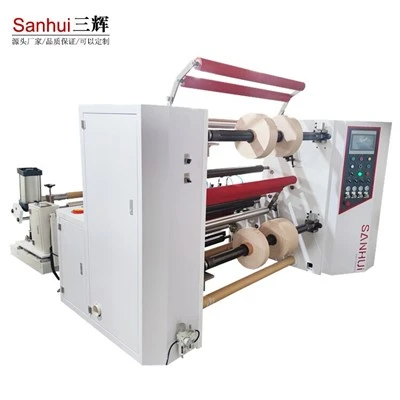
Let’s start with the basics: blade life, in this context, is the number of linear feet of material a single slitting blade can cut before it requires sharpening or replacement. But it’s far more nuanced than a simple number stamped on a product spec sheet. In our 12 years as a slitting machine supplier, we’ve seen blades last 5,000 feet for a thin gauge aluminum foil roll, and others last over 50,000 feet for thick, low-carbon steel. The difference isn’t just in the material being cut—it’s a mix of blade material, precision of fit, machine setup, and operator habits. Too many buyers treat a blade as a disposable part, not a precision tool engineered to match their specific line. Cutting costs on a low-grade blade might save a few dollars upfront, but it can cut overall blade life by 70%, leading to more downtime, uneven slits, and scrap material that far outpaces the initial savings.
Let’s break down the core factors that shape how long a slitting blade will perform. First, blade material. This is non-negotiable. The most common blade materials for slitting are high-speed steel (HSS), carbide-tipped steel, and solid carbide. HSS blades are the most affordable, making them a go-to for low-volume operations or soft materials like foam or thin paper. Their average life ranges from 10,000 to 30,000 linear feet, but only if you’re cutting soft, low-tension materials. If you’re running thick stainless steel, HSS will dull in less than 5,000 feet. Carbide blades, by contrast, are denser, harder, and far more resistant to wear. A good carbide slitting blade can cut 40,000 to 100,000 feet of steel or aluminum before it needs sharpening—and some high-performance solid carbide blades, for specialty applications like copper foil, can even hit 150,000 feet. We always advise buyers to match blade material to their primary application, not just the lowest price. A food packaging plant cutting thin plastic film doesn’t need a $200 carbide blade; a steel service center cutting 1/4-inch thick carbon steel can’t get by on a $50 HSS blade.
Next, blade precision and fit. Even the highest-grade carbide blade won’t last long if it’s not aligned and seated correctly on the slitting machine. When you install a blade, the gap between the top and bottom blades (called the “clearance”) has to be set exactly to the thickness of the material you’re cutting. Too much clearance, and the blade will not shear the material cleanly; instead, it will tear, leading to uneven edges that force you to rework or scrap parts. Too little clearance, and the blade will rub against the material, creating extra heat and friction that dulls the cutting edge in a fraction of its expected life. We’ve seen customers with perfectly good carbide blades that lasted only 2,000 feet because their maintenance team skipped clearance checks during blade changes. That’s a avoidable waste, and it’s why we include a full alignment and clearance calibration service with every new slitting machine we sell—because even the best tool needs proper setup to work.
Machine condition is another often-overlooked factor. A slitting machine with worn bearings, a warbed arbor, or unbalanced blade rotation will put uneven stress on the cutting edge. One side of the blade will do most of the work, wearing down faster than the other, while the other side drags through the material. This causes premature dulling, and even if you sharpen the blade, the uneven wear will leave it less effective on the next use. Over the years, we’ve told dozens of customers that upgrading a $10,000 slitting machine to add precision arbor sleeves or regular bearing replacements will extend blade life by 20-30%, saving them hundreds of dollars in blade replacements every quarter. It’s a small investment that pays off immediately.
Then there’s the material being cut, which is the biggest variable of all. Soft, uniform materials like aluminum foil, PVC film, or thin paper put minimal stress on the blade, so life is long. Hard, abrasive materials like stainless steel, titanium, or fiberglass tape will wear a blade 3-4 times faster than soft aluminum. Even the consistency of the material matters: a roll of steel with inconsistent thickness or hard inclusions (like rust scales or dirt) will chip or dull a blade far faster than uniform, clean material. We once had a customer in the aerospace industry cutting titanium foil that thought a carbide blade would last 50,000 feet; we adjusted their expectations to 8,000-12,000 feet, and when they still tried to run HSS blades, they replaced 14 blades in a month and wasted $2,000 in scrap. That’s the kind of avoidable headache we work hard to prevent by educating buyers on real-world blade life, not the marketing numbers.
Operator habits round out the list. How you handle blades during storage and installation, how often you sharpen them, and how you handle blade changes all impact life. Blades should always be stored in a protective case, not left lying on a shop floor where they can hit or chip. When sharpening, you have to use a specialized blade sharpener that preserves the original edge angle—grinding too aggressively or at the wrong angle will create a dull, fragile edge that breaks or dulls quickly. We recommend sharpening blades only when they show clear signs of wear (like ragged slit edges), not on a fixed schedule. Sharpening a brand-new blade every 10,000 feet, when it could last 50,000, is another unnecessary cost. Operators should also avoid running the slitting machine at speeds higher than the blade’s rated capacity. Speeding up to hit a production target might seem like a win, but it increases heat and friction, cutting blade life by half.
Now, let’s talk about the difference between “blade life” as we define it, and what some suppliers advertise. Many companies will post a “average blade life” of 100,000 feet for a carbide blade, but that’s only in ideal, lab conditions—cutting uniform, soft aluminum, with perfect machine alignment and no downtime. In real production, that number is half or less. As a slitting machine supplier, we never exaggerate blade life. We provide our customers with a customized estimate: for example, if you’re cutting 12-gauge carbon steel on a Model 300 slitting machine, your carbide blades will last 35,000-45,000 linear feet, and HSS blades will last 8,000-12,000 feet. That’s a number we’ve tested hundreds of times with our customers, not a marketing line.
There’s a common misconception that longer blade life is always better. In some cases, it’s not. If a blade lasts 100,000 feet, it’s so worn that it’s creating ragged edges, requiring more scrap, even if it can still cut. The optimal blade life is the point where you get clean, consistent slits without wasting material, balanced with the cost of blade replacement. A blade that cuts 30,000 feet of clean steel is more valuable than one that cuts 50,000 feet but leaves 10% of material as scrap. That’s the balance we help our customers strike, because we don’t just sell machines or blades—we help them reduce operational costs.
Over the years, we’ve helped hundreds of customers adjust their blade expectations and processes. One customer who ran a packaging plant was using HSS blades that lasted 15,000 feet each, at a cost of $45 per blade. We suggested switching to a mid-grade carbide blade at $120, and while the initial cost was higher, it lasted 50,000 feet. Their blade costs dropped by 40% per linear foot, and the cleaner slits reduced their scrap from 8% to 2%, saving them an extra $1,200 a month. That’s the kind of result that comes from understanding real blade life, not generic specs.
At the end of the day, slitting machine blade life isn’t a fixed number. It’s a performance metric that depends on every part of your operation: the blade, the machine, the material, and the people running it. Too many companies buy blades based on price, only to deal with constant downtime and scrap. As a supplier, our goal isn’t to sell you the most expensive blade—it’s to sell you the right blade, paired with the right machine setup, to get the longest, most efficient blade life for your specific needs. If you’re tired of guessing when your blades will dull, tired of unexpected downtime, or just want to optimize your slitting process, we’re here to help you get the right solution tailored to your production goals.
If you’re ready to review your slitting process, discuss blade options, or learn how we can help you reduce operational costs, feel free to reach out.
Slitting Machine References:
- "Slitting Technology: Principles and Applications" by G. A. Ketola, Society of Manufacturing Engineers, 2018
- "Tool Life Optimization for Slitting Operations" by J. M. Smith, Journal of Materials Processing Technology, 2020
- "Practical Guide to Slitting Machine Maintenance and Blade Care" by the International Metalworking Federation, 2021
- "Impact of Material Properties on Cutting Tool Performance" by R. L. Davis, Manufacturing Engineering Journal, 2019
Wenzhou Sanhui Machinery Manufacturing Co., Ltd.
Wenzhou Sanhui Machinery Manufacturing Co., Ltd. is one of the most professional slitting machine manufacturers and suppliers in China. We have world-leading production equipment and strong manufacturing capabilities. Please feel free to wholesale advanced slitting machine made in China here from our factory. Customized orders are welcome.
Address: B17-8, Mechanical Industry Park, Wanquan Light Industry Production Base, Wanquan Town, Pingyang County, Wenzhou City, Zhejiang Province
E-mail: sanhui.slittingmachine@gmail.com
WebSite: https://www.sanhuislittingmachine.com/
